April 22, 2026

digital currency

Navigating the world of cryptocurrency can feel daunting, but understanding how to buy and send Bitcoin on Cash App is surprisingly straightforward. This guide provides a comprehensive overview, from account setup to secure transactions, equipping you with the knowledge to confidently engage with this digital asset.

Whether you’re a seasoned crypto investor or a newcomer to the space, this guide breaks down the process into easily digestible steps. We’ll cover everything from creating a Cash App account to sending Bitcoin to a friend or a different wallet, offering clear explanations and practical examples.

Introduction to Bitcoin and Cash App

Bitcoin is a decentralized digital currency, meaning it isn’t controlled by any single entity like a bank or government. It operates on a distributed ledger technology called blockchain, which records transactions across a network of computers. This decentralized nature contributes to its security and transparency. Bitcoin’s value fluctuates based on supply and demand, making it a volatile investment.

Its use cases range from online transactions to investment opportunities.The fundamental concept behind Bitcoin transactions is that they are verified and recorded on the blockchain. Each transaction is cryptographically linked to the previous one, creating a secure and transparent history. This process, known as mining, requires computational power to verify and add new blocks of transactions to the blockchain.

Cash App, a mobile payment platform, provides a user-friendly interface for buying and selling Bitcoin, making it accessible to a wider audience.

Understanding Bitcoin

Bitcoin’s value is determined by market forces. Factors such as demand, supply, and perceived utility influence its price. It’s important to note that Bitcoin’s value can fluctuate significantly in short periods, representing inherent risks associated with this type of investment. Bitcoin’s decentralized nature makes it attractive to those seeking an alternative to traditional financial systems.

Bitcoin Transactions

Bitcoin transactions are secured by cryptography. Each transaction involves a unique digital signature that verifies the sender’s identity. This ensures that only the intended recipient can access the funds. The blockchain’s immutability further enhances the security of these transactions.

Cash App and Bitcoin

Cash App facilitates Bitcoin transactions through its mobile application. Users can easily buy, sell, and hold Bitcoin directly within the app. This accessibility makes Bitcoin more readily available to a broader range of users compared to traditional methods. The platform also offers tools for tracking Bitcoin holdings and managing transactions.

Comparison of Digital Currencies

Currency Features Limitations
Bitcoin Decentralized, secure, global reach, relatively high transaction volume Volatile price, energy-intensive mining process, limited functionality compared to some other cryptocurrencies.
Ethereum Decentralized platform for smart contracts and decentralized applications (dApps), broader functionality beyond simple transactions. Higher transaction fees compared to Bitcoin, more complex to use for basic transactions.
Dogecoin Decentralized, meme-based cryptocurrency with a large community, relatively low transaction fees. Highly speculative, price volatility is exceptionally high, less widely adopted for mainstream transactions.

This table provides a concise comparison of Bitcoin with other notable digital currencies. Each cryptocurrency has its own unique characteristics, making them suitable for different purposes and use cases.

Buying Bitcoin on Cash App

Purchasing Bitcoin on Cash App is a straightforward process, but understanding the steps and security measures involved is crucial for a smooth and secure experience. This section details the account creation, verification, and Bitcoin purchase procedures, outlining available payment options and Cash App’s security protocols.

Creating a Cash App Account for Bitcoin Purchases

To buy Bitcoin on Cash App, you first need to create a Cash App account. The process is relatively simple and involves providing personal information, such as your name, phone number, and email address. This information is used for account verification and security purposes. Follow the on-screen prompts to complete the registration process.

Verifying Your Cash App Account

Account verification is a critical step to ensure the security and legitimacy of your Cash App account. Cash App uses various verification methods to prevent fraudulent activities. These methods may include identity verification, such as submitting government-issued identification documents. This process is designed to verify your identity and protect your account from unauthorized access.

Purchasing Bitcoin Using Cash App

Once your Cash App account is verified, you can proceed with purchasing Bitcoin. The process involves selecting the amount of Bitcoin you wish to buy and confirming the transaction. Cash App typically displays a real-time Bitcoin price.

  • Select “Bitcoin” from the Cash App interface.
  • Enter the desired amount of Bitcoin you wish to purchase.
  • Review the transaction details, including the current Bitcoin price and the total cost.
  • Choose your preferred payment method from the available options.
  • Confirm the transaction to complete the purchase.

Payment Methods for Bitcoin Purchases

Cash App offers various payment options for Bitcoin purchases. This flexibility allows users to choose the method most convenient for them.

Payment Method Description
Bank Account Debit or credit card linked to a bank account.
Debit Card Direct debit from your linked debit card.
Credit Card Direct credit card payment for the Bitcoin purchase.
Cash App Cash Using Cash App Cash balance to buy Bitcoin.

Cash App’s Security Measures for Bitcoin Transactions

Cash App implements robust security measures to protect user funds and Bitcoin transactions. These measures are designed to deter fraudulent activities and safeguard user assets. Strong passwords, two-factor authentication, and transaction monitoring are all crucial components of this strategy.

Cash App employs advanced encryption techniques to secure transactions and protect sensitive data.

Sending Bitcoin on Cash App

Sending Bitcoin on Cash App is a straightforward process, allowing users to transfer digital currency to other accounts. This process is secure, but users should understand the steps and potential risks involved. Understanding the necessary information and procedures will help users navigate this process effectively.

The Bitcoin Transfer Process

The Cash App platform provides a user-friendly interface for initiating Bitcoin transfers. Users typically access the Bitcoin section of the app, locate the recipient’s details, and input the amount they wish to send. Confirmation steps are implemented to ensure the transaction is authorized by the sender.

Necessary Information for Sending Bitcoin

To initiate a Bitcoin transfer, the sender requires specific details about the recipient. This includes the recipient’s Cash App username or, if sending to an external address, the recipient’s Bitcoin address. The amount of Bitcoin to be sent must also be specified. Accurate input of this information is critical to ensure the Bitcoin reaches the intended recipient.

Examples of Sending Bitcoin

Sending Bitcoin to a friend or family member on Cash App is similar to sending money via other digital platforms. For example, if Sarah wants to send 0.5 Bitcoin to her brother, Mark, she would locate Mark’s Cash App username, enter the amount, and confirm the transaction. Likewise, sending Bitcoin to a business entity follows a similar procedure.

Comparison with Other Payment Methods

Sending Bitcoin on Cash App differs from traditional payment methods like bank transfers or credit card transactions. Bitcoin transactions are often faster and can be made globally, without the need for intermediary banks. However, Bitcoin transactions may be subject to transaction fees, which can vary depending on the network congestion. The security of Bitcoin transactions is also a key differentiating factor.

Potential Risks and Precautions

Users should be cautious about potential security risks when sending Bitcoin. Scams and fraudulent activities are possible online, and users should verify the recipient’s identity and avoid sharing sensitive information. Proper authentication steps should be followed before initiating any Bitcoin transaction.

Sending to a Non-Cash App Address

Sending Bitcoin to a non-Cash App address (a Bitcoin wallet, for example) requires the recipient’s Bitcoin address. This address is a unique alphanumeric string that identifies the recipient’s Bitcoin wallet. The Cash App platform may provide a feature to copy or paste this address directly into the transaction input field.

Methods for Sending Bitcoin on Cash App

Method Description
Cash App to Cash App Transferring Bitcoin between two Cash App accounts.
Cash App to External Address Sending Bitcoin to a Bitcoin wallet not associated with Cash App.

Buying Bitcoin (General)

Buy 1 Get Banner, Buy One Get 1, Buy 1, Get 1 PNG and Vector with ...

Bitcoin, a decentralized digital currency, can be purchased through various avenues beyond mobile apps like Cash App. Understanding these alternative methods, the platforms involved, and the inherent security considerations is crucial for safe and informed transactions. This section explores diverse Bitcoin acquisition strategies, from exchanges to research techniques, equipping you with the knowledge to make sound decisions.

Alternative Bitcoin Purchase Methods

Numerous platforms facilitate Bitcoin purchases outside of Cash App. These platforms offer varying features and fees, demanding careful consideration. Choosing the right platform depends on your specific needs and risk tolerance.

  • Cryptocurrency Exchanges: Centralized platforms like Coinbase, Kraken, and Binance act as intermediaries for buying and selling Bitcoin. They provide a structured environment for trading, often with robust security measures. The security measures vary by platform, so researching each exchange’s security protocols is crucial.
  • Brokerage Platforms: Some brokerage platforms, like Fidelity and Schwab, are increasingly offering Bitcoin trading options. These platforms may integrate Bitcoin purchases into their existing investor accounts, providing a seamless experience for users familiar with their services. However, their approach to Bitcoin may not be as specialized as dedicated cryptocurrency exchanges.
  • Peer-to-Peer (P2P) Platforms: P2P platforms like LocalBitcoins connect buyers and sellers directly. This allows for potentially lower fees, but it carries greater risks due to the absence of a central intermediary. Thorough verification of the seller and understanding the associated risks are paramount.

Bitcoin Exchanges and Trading

Bitcoin exchanges are online marketplaces where individuals can buy and sell Bitcoin. They act as a facilitator, connecting buyers and sellers through their platform. Exchanges use a variety of methods to facilitate trading.

  • Order Matching: Exchanges use order books to match buyers and sellers based on price and quantity. Orders can be market orders (executed immediately at the best available price) or limit orders (executed only at a specific price or better). Understanding these order types is essential for navigating exchange trading.
  • Liquidity Provision: Exchanges often rely on liquidity providers who offer their Bitcoin to the market to maintain price stability. This can improve trading volume and the overall user experience.
  • Security Measures: Reputable exchanges employ various security measures to protect user funds and assets. These may include multi-factor authentication, cold storage, and insurance policies. The efficacy of these measures is crucial for user trust.

Bitcoin Buying Procedures

Buying Bitcoin generally involves these steps:

  1. Account Creation: Creating an account on a chosen exchange or platform usually requires providing personal information and verifying your identity.
  2. Funding Your Account: Depositing funds into your account, typically through bank transfer or other supported methods, is the next step.
  3. Placing a Purchase Order: Specifying the amount of Bitcoin you want to buy and the price you’re willing to pay. Different order types (market, limit) are available.
  4. Confirming the Purchase: Once the order is matched, you receive the Bitcoin into your account. Confirming the transaction and checking the transaction details is essential.

Security Measures for Bitcoin Purchases

Securing your Bitcoin holdings after purchase is critical. Implementing robust security measures safeguards your investment from potential threats.

  • Strong Passwords: Use strong, unique passwords for your exchange accounts and enable two-factor authentication (2FA) whenever possible.
  • Secure Storage: If possible, use a hardware wallet to store your Bitcoin offline, away from the internet, to reduce the risk of online hacking.
  • Regular Monitoring: Stay informed about any suspicious activity on your accounts.

Bitcoin Exchange Fee Comparison

Exchange fees vary considerably, impacting the cost of acquiring Bitcoin. Understanding these differences is essential for informed purchasing decisions.

Exchange Typical Trading Fee Other Fees
Coinbase 0.5% – 1.5% Potential account maintenance fees
Kraken 0.26% – 0.76% Deposit and withdrawal fees
Binance 0.1% – 0.1% Deposit and withdrawal fees

Bitcoin Price Research

Understanding Bitcoin’s price fluctuations and market trends is crucial for informed buying decisions. Monitoring various resources provides insights into potential opportunities.

  • Real-time Tracking: Use reputable websites or apps that track Bitcoin’s real-time price.
  • Market Analysis: Review news and analyses to assess potential market trends and movements. Stay updated on any significant announcements or developments that might affect Bitcoin’s value.

Security and Safety

Protecting your Bitcoin investments on Cash App requires a proactive approach to security. Neglecting security measures can lead to significant financial losses. This section details crucial aspects of safeguarding your Cash App account and Bitcoin holdings.Bitcoin, while offering potential rewards, comes with inherent risks. Understanding these risks and implementing appropriate security protocols is paramount to avoiding costly mistakes and ensuring a safe trading experience.

Importance of Secure Practices

Robust security measures are essential for safeguarding your Bitcoin assets. A compromised Cash App account can expose you to unauthorized access and theft of your Bitcoin holdings. Implementing strong security practices is critical for maintaining control of your digital assets.

Common Security Threats

Various threats can jeopardize your Bitcoin transactions on Cash App. Phishing scams, where malicious actors attempt to trick you into revealing your login credentials, are a significant concern. Malware infections can also compromise your device and gain access to your sensitive information, including your Cash App login details and Bitcoin wallet keys. Social engineering tactics, exploiting your trust and manipulating you into revealing sensitive data, are another potential danger.

Finally, account takeover attempts by hackers seeking to exploit vulnerabilities in the platform are always a possibility.

Protecting Your Cash App Account

Maintaining a secure Cash App account is crucial for protecting your Bitcoin. Use strong, unique passwords for your Cash App account and avoid reusing passwords across multiple platforms. Enable two-factor authentication (2FA) to add an extra layer of security. Regularly update your Cash App app to benefit from the latest security patches. Be cautious about clicking on suspicious links or downloading attachments from unknown sources, as this can expose your account to malware.

Keep your device’s operating system and applications up-to-date to minimize vulnerabilities.

Avoiding Scams and Fraud

Be vigilant about potential scams and fraudulent activities related to Bitcoin. Never share your private keys or login credentials with anyone, and be wary of unsolicited requests for this information. Avoid clicking on links in suspicious emails or messages. Be cautious of advertisements promising high returns on Bitcoin investments, as these may be fraudulent schemes. Verify the legitimacy of any Bitcoin-related transactions or offers.

Reporting Suspicious Activity

If you suspect suspicious activity related to your Bitcoin transactions on Cash App, report it immediately to Cash App support. Provide detailed information about the suspicious activity, including the date, time, and any relevant details. Follow Cash App’s reporting procedures to ensure your concern is addressed effectively. By promptly reporting suspicious activity, you help protect your account and assets.

Fees and Costs

Understanding the fees associated with buying and sending Bitcoin on Cash App is crucial for budgeting and managing your cryptocurrency transactions effectively. These costs can vary, and knowing how they are calculated is essential for making informed decisions.Cash App, like other cryptocurrency platforms, charges fees for facilitating transactions. These fees are designed to cover the platform’s operational expenses and ensure the smooth functioning of the Bitcoin ecosystem.

Understanding the structure of these fees will help you plan your Bitcoin activities on the platform.

Transaction Fees for Buying Bitcoin

Cash App typically charges a small percentage fee for buying Bitcoin. This fee is often dependent on the specific buying method you use and the amount of Bitcoin you purchase. It’s vital to factor these fees into your budget when making a purchase.

Transaction Fees for Sending Bitcoin

Similar to buying, sending Bitcoin on Cash App incurs fees. These fees, often a combination of network and platform fees, can vary based on the transaction’s size and the current network conditions. These fees are crucial to consider when sending Bitcoin to another user.

Network Fees (Miner Fees)

Network fees, sometimes referred to as miner fees, are separate from Cash App’s platform fees. These fees are paid to the miners who verify and record Bitcoin transactions on the blockchain. The amount of these fees fluctuates based on network congestion. Higher network congestion often leads to higher fees.

Bank Charges

If you’re using a bank transfer to fund your Bitcoin purchase, your bank may impose its own fees. These charges are separate from Cash App’s fees and should be considered when calculating the overall cost of buying Bitcoin.

Cash App Fee Structure

Cash App’s fee structure is designed to be transparent, with fees usually clearly displayed during the transaction process. The exact fee structure is subject to change, so it’s essential to check Cash App’s current fee schedule before making any transactions.

Typical Transaction Fees (Illustrative Table)

Transaction Type Approximate Fee (USD) Notes
Buying $100 worth of Bitcoin $0.50 – $2.00 This is a range, and the exact fee depends on the method used.
Sending 1 Bitcoin $0.001 – $0.01 This is highly variable and depends on network congestion.

Note: The table above provides a general illustration. Actual fees may vary. Always confirm the specific fees on Cash App before making any transaction.

How Fees Are Calculated

Cash App fees are typically calculated as a percentage of the transaction amount. The percentage may vary based on the method of purchase or the amount being transacted. There may also be a fixed minimum fee. This means the more you buy or send, the higher the fee can potentially be. Be sure to check the current pricing schedule with Cash App for accuracy.

Troubleshooting

Navigating the digital world of cryptocurrency can sometimes present unexpected challenges. This section details common problems encountered when buying and sending Bitcoin on Cash App, offering solutions and steps for resolution. Understanding these issues and their fixes can streamline your transactions and prevent frustration.

Common Bitcoin Buying Issues on Cash App

Troubleshooting Bitcoin purchases often revolves around connectivity issues, insufficient funds, or incorrect account information. A systematic approach to these problems is essential.

  • Connectivity Problems: Cash App’s platform relies on a stable internet connection. If you encounter errors during the buying process, ensure your internet connection is reliable. Try restarting your device, switching to a different Wi-Fi network, or using cellular data if available. If the problem persists, contact Cash App support for further assistance.
  • Insufficient Funds: Double-check your Cash App balance before initiating a Bitcoin purchase. Ensure there are sufficient funds available in your account to cover the purchase amount and any associated fees. If you’ve mistakenly tried to buy more Bitcoin than you have funds for, the transaction will likely be declined.
  • Incorrect Account Information: Verify the accuracy of the information entered during the purchase process. Any discrepancies in your account details, such as your email address or phone number, can lead to transaction failures. Double-checking these details prevents unnecessary delays and errors.

Common Bitcoin Sending Issues on Cash App

Similar to buying, sending Bitcoin on Cash App can encounter various problems, often centered around recipient details or insufficient Bitcoin balance.

  • Incorrect Recipient Address: A crucial step is verifying the recipient’s Bitcoin address. A single incorrect character can result in a failed transaction. Carefully review the recipient’s address to ensure accuracy before proceeding.
  • Insufficient Bitcoin Balance: Ensure you have enough Bitcoin in your Cash App wallet to cover the transaction amount. Verify the balance before sending to avoid transaction rejection.
  • Transaction Confirmation Delays: Bitcoin transactions, like any digital transaction, have a confirmation process. These confirmations ensure the transaction’s validity and security within the blockchain network. While delays are usually brief, unusually prolonged waits could indicate network congestion or other issues. Checking the transaction history on the Cash App platform should show the status of the transaction.

Contacting Cash App Support

Cash App provides various support channels for resolving Bitcoin-related issues. This direct support is vital for resolving complex problems.

  • Customer Support: Cash App offers customer support channels to assist with Bitcoin transactions. The availability and specifics of these support options might vary, so it’s best to refer to Cash App’s official website or app for details.

Troubleshooting Table

Issue Solution
Connectivity problems during purchase Verify internet connection, restart device, switch networks, use cellular data.
Insufficient funds for purchase Ensure sufficient funds in your Cash App account.
Incorrect account information Double-check and correct any discrepancies in your account details.
Incorrect recipient address Verify the recipient’s Bitcoin address for accuracy.
Insufficient Bitcoin balance for sending Ensure you have enough Bitcoin in your Cash App wallet.
Transaction confirmation delays Check transaction history on the Cash App platform for confirmation status.

Epilogue

In conclusion, buying and sending Bitcoin on Cash App can be a smooth process once you grasp the fundamentals. This guide has provided a thorough explanation of the steps involved, highlighting key security considerations and common troubleshooting tips. By following the provided instructions and maintaining a cautious approach, you can confidently navigate the world of Bitcoin transactions on Cash App.

Question Bank

What are typical transaction fees for sending Bitcoin on Cash App?

Transaction fees on Cash App for sending Bitcoin vary and are dependent on factors like network congestion and the amount being sent. Cash App often includes these fees in their transaction details, so it’s essential to review the information before completing the transfer.

What are some common security threats when buying and sending Bitcoin on Cash App?

Common threats include phishing scams, where fraudsters attempt to trick you into revealing your login credentials or private keys. Always be wary of suspicious links or requests for personal information. Using strong passwords, enabling two-factor authentication, and regularly monitoring your account are crucial.

How can I avoid scams and fraudulent activities related to Bitcoin on Cash App?

Be extremely cautious about unsolicited messages or offers regarding Bitcoin. Never share your private keys or passwords with anyone. Stick to reputable sources for information and research any unfamiliar platform or individual before engaging with them.

What if I lose my Cash App login credentials or my Bitcoin private key?

Losing access to your Cash App account or Bitcoin private key can be problematic. Review your account settings and make sure you have a strong password and enabled two-factor authentication. If you suspect a breach, immediately contact Cash App support for assistance.
Bitcoin meaning for kids opens the door to a fascinating world of digital currency that is transforming how we think about money. Imagine a form of money that isn’t made of paper or coins but exists only in computers! In this engaging exploration, we’ll break down what bitcoin is, how it works, and why it’s important for children to understand this concept as they grow up in a tech-driven world.

By simplifying complex ideas, we will show kids how bitcoin differs from the money they know, provide safe ways they might interact with it, and share fun facts that make learning about this online currency exciting and relevant.

Understanding Bitcoin

Bitcoin is a type of digital money that you can’t touch, like the coins or bills you might have in your piggy bank. Instead, it exists only on computers and the internet. It’s special because it doesn’t rely on banks or governments to control it. Instead, Bitcoin is managed by a technology called blockchain, which makes it very safe and transparent.

Bitcoin is different from traditional money in several ways. For one, you can send Bitcoin to anyone in the world without needing a bank. Traditional money, like dollars or euros, often requires going through a bank or using a credit card. Also, Bitcoin can be divided into tiny pieces, which means you don’t need to have a whole Bitcoin to use it.

Kids might use Bitcoin to buy fun things like video games or cool digital stickers, but it’s important they do so safely, like only spending small amounts and using secure websites.

The History of Bitcoin

Bitcoin was created in 2009 by a mysterious person or group of people using the name Satoshi Nakamoto. They wanted to make a new kind of money that was free from government control and bank fees. The first Bitcoin transaction was made when Satoshi sent 10 Bitcoins to a computer scientist named Hal Finney. Some important milestones in Bitcoin’s history include the first real-world purchase with Bitcoin, which was for two pizzas in 2010.

This event showed that Bitcoin could be used to buy real things. Another key moment was when Bitcoin’s price first reached $1,000 in late 2013, which got a lot of people’s attention. Many interesting figures played a role in Bitcoin’s development, including developers who worked on improving its software and people who created exchanges where people can buy and sell Bitcoin.

How Bitcoin Works

The technology behind Bitcoin is called blockchain, which is like a digital notebook that keeps track of every Bitcoin transaction. Every time someone sends or receives Bitcoin, that information is recorded in this notebook, making it nearly impossible to cheat. When you want to use Bitcoin, you send it from your digital wallet to someone else’s wallet. This process involves a network of computers working together to confirm that the transaction is valid.

This confirmation usually happens quickly, allowing people to use Bitcoin easily.Mining is another important part of Bitcoin. It’s like a treasure hunt where people use powerful computers to solve complex puzzles. When they solve a puzzle, they get rewarded with new Bitcoins. Mining helps keep the network secure and is essential for creating new Bitcoins.

Benefits and Risks of Bitcoin

Using Bitcoin has several advantages. It allows people to make fast transactions without needing a bank, and it’s often cheaper than using traditional banking services. Additionally, Bitcoin can be very secure because of its use of blockchain technology, making it difficult for hackers to steal information.However, there are also risks associated with using Bitcoin. The price of Bitcoin can be very unstable, meaning it can go up and down quickly, which can confuse young users.

There’s also the risk of scams, where bad people might trick you into giving them your Bitcoin. That’s why it’s essential to be careful and only use trusted websites.When comparing Bitcoin to traditional banking methods, Bitcoin transactions can be faster and cheaper, but traditional banks usually offer more protections and customer service, which can be helpful for young users.

The Future of Bitcoin

In the future, Bitcoin technology might develop in exciting ways. For example, new apps could make it easier for kids to use Bitcoin safely, like allowing them to use it for everyday purchases at stores or online. Imagine a world where you could use Bitcoin to pay for your lunch at school or buy a game on your tablet without needing cash or a bank card.

That’s a possibility with the growth of digital currencies. Understanding Bitcoin is important for young people because it teaches them about money in a digital world. As technology continues to evolve, being aware of how Bitcoin works could help them make smart financial decisions later in life.

Fun Facts About Bitcoin

Here are some fun facts about Bitcoin that kids might find interesting:

  • Bitcoin’s creator, Satoshi Nakamoto, is still unknown, adding a mystery to its story.
  • The first Bitcoin transaction was for two pizzas, which cost 10,000 Bitcoins!
  • There will only ever be 21 million Bitcoins, making it a scarce resource.
  • Bitcoin can be divided into smaller units called “satoshis,” named after its creator.
  • Some people use Bitcoin to donate to charities because it is easy to send and receive.

Kids might also be surprised to learn that some people have used Bitcoin to buy unusual things, like a space trip or even a car! Organizing a trivia game based on Bitcoin facts can be a fun way for kids to learn about it. Questions could include facts like “What was the first item ever bought with Bitcoin?” or “Who is the mysterious creator of Bitcoin?” This not only makes learning fun but also helps cement important knowledge about the digital currency.

Final Review

In wrapping up our journey through the world of bitcoin meaning for kids, we’ve uncovered not only the basics of what bitcoin is but also its potential future and how it can fit into children’s lives today. Understanding bitcoin is not just about finance; it’s about grasping the evolving landscape of technology and its impact on our daily lives. As children learn more about this digital currency, they gain valuable skills that prepare them for the future.

Question & Answer Hub

What is bitcoin?

Bitcoin is a type of digital money that allows people to buy and sell things online without using traditional banks.

Is bitcoin safe for kids?

Bitcoin can be safe if used wisely and with adult supervision, just like using the internet responsibly.

Can kids use bitcoin?

Kids can learn about bitcoin and even use it in games or apps designed for them under guidance.

How is bitcoin different from cash?

Unlike cash, bitcoin is completely digital and can exist only online; it doesn’t have a physical form.

Why should kids learn about bitcoin?

Learning about bitcoin helps kids understand money, technology, and how people trade and interact in a digital world.

Bitcoin price target 2030 is a captivating topic, exploring the potential trajectory of this digital asset. Various factors influence its price, including macroeconomic conditions, regulatory shifts, technological advancements, and market sentiment. This analysis dives deep into historical trends, expert predictions, and technical indicators to offer a comprehensive understanding of the potential Bitcoin price in 2030.

This detailed overview examines the complex interplay of forces shaping the future of Bitcoin. From the adoption rate by businesses and individuals to the broader cryptocurrency market landscape, we will uncover the nuances behind potential price targets.

Bitcoin Price Prediction Overview

Bitcoin’s price has exhibited significant volatility since its inception, fluctuating dramatically over time. Early adoption and rapid growth were followed by periods of correction and consolidation. Understanding this historical context is crucial for evaluating any prediction for 2030. The cryptocurrency market is notoriously unpredictable, influenced by numerous factors, including regulatory changes, technological advancements, and market sentiment.A variety of factors contribute to the difficulty in accurately forecasting Bitcoin’s price.

The inherent decentralized nature of Bitcoin, coupled with its relatively nascent status compared to traditional financial markets, makes precise predictions challenging. However, analysis of historical trends, current market conditions, and future developments can provide a framework for exploring potential price targets.

Historical Price Fluctuations of Bitcoin

Bitcoin’s price history is marked by periods of substantial growth and equally dramatic declines. The initial surge in value was followed by significant corrections, demonstrating the inherent volatility of the cryptocurrency market. Several factors contribute to these fluctuations, including market speculation, adoption by institutional investors, regulatory changes, and technological advancements. Understanding these historical fluctuations is important for contextualizing potential future price movements.

Price Projections for Bitcoin in 2030

Analysts offer a range of price projections for Bitcoin in 2030, reflecting the inherent uncertainty in predicting future market trends. Some forecasts suggest Bitcoin could reach or exceed $100,000 USD, while others project a more modest price range. The diverse predictions highlight the speculative nature of the market and the variety of factors considered in the models. These projections represent varying levels of optimism and caution regarding future adoption and market conditions.

Methodology Used by Different Prediction Models

Various methodologies are employed by different analysts and forecasting models to project Bitcoin’s price in 2030. Some models focus on technical analysis, examining historical price patterns and trading volume. Others incorporate fundamental analysis, considering factors such as Bitcoin’s network effect, adoption by businesses, and regulatory landscape. Still others utilize machine learning algorithms to predict price based on historical data and market indicators.

The chosen methodology significantly impacts the accuracy and reliability of the forecast.

Comparison of Bitcoin Price Target Predictions for 2030

Analyst/Source Price Target (USD) Date Methodology
Analyst A $120,000 2023-10-27 Technical analysis, fundamental analysis, and market sentiment
Analyst B $85,000 2023-11-15 Machine learning model using historical Bitcoin data, adoption rates, and regulatory trends
Research Firm C $150,000 2023-12-05 Quantitative model incorporating various market indicators and macroeconomic forecasts
Cryptocurrency News Platform D $90,000 2023-12-10 Aggregation of expert opinions, surveys, and market sentiment data

Note: This table represents a simplified comparison. Different analysts may employ complex models and use various data sources, potentially leading to significant discrepancies in price predictions.

Factors Influencing Bitcoin Price in 2030

Bitcoin’s trajectory in 2030 will be shaped by a complex interplay of macroeconomic forces, regulatory shifts, technological advancements, and market adoption. Predicting the exact price is impossible, but understanding these influential factors provides a framework for assessing potential outcomes. These factors are not isolated events, but rather interconnected forces that will dynamically impact the cryptocurrency market.Macroeconomic conditions will undoubtedly play a crucial role in setting the stage for Bitcoin’s performance.

Interest rate fluctuations, inflation rates, and global economic growth will influence investor sentiment and capital allocation. A robust global economy, coupled with stable inflation, could create a supportive environment for Bitcoin’s price appreciation. Conversely, economic downturns or high inflation could lead to increased risk aversion, potentially depressing Bitcoin’s price.

Macroeconomic Factors

The global economy will significantly impact Bitcoin’s value in 2030. Economic recessions, characterized by high unemployment and reduced consumer spending, can lead to decreased investment in risky assets like Bitcoin. Conversely, robust economic growth and stable inflation can encourage investment in Bitcoin as a hedge against traditional financial assets. The strength of the US dollar and other major currencies will also influence investor decisions regarding Bitcoin as a store of value.

For example, periods of significant currency devaluation can heighten interest in Bitcoin as a potential alternative.

Regulatory Changes

Regulatory landscapes surrounding cryptocurrencies are rapidly evolving. Clarified regulations in key jurisdictions, such as the United States, could lead to increased institutional adoption and market stability. Conversely, restrictive or unclear regulations could create uncertainty and volatility, potentially negatively impacting Bitcoin’s price. The introduction of new regulatory frameworks, like those governing stablecoins, can shape the ecosystem and influence investor confidence.

Technological Advancements

Technological advancements will be instrumental in defining the future of Bitcoin. Innovations in blockchain technology, such as improved scalability and transaction speed, can enhance Bitcoin’s practicality and appeal to a wider range of users. The development of new applications and use cases for Bitcoin can also contribute to its increasing adoption. Furthermore, advancements in quantum computing could pose a potential threat to Bitcoin’s security, necessitating the development of new cryptographic solutions to ensure its long-term viability.

Adoption Rate

The adoption rate of Bitcoin by businesses and individuals will significantly influence its price in 2030. Increased mainstream acceptance, particularly within the financial sector, can lead to greater demand and, subsequently, price appreciation. The emergence of new Bitcoin-related services, such as payment processors and investment platforms, can also play a crucial role in fostering wider adoption. Factors such as ease of use, security, and regulatory clarity will influence the pace of adoption.

Market Trends

Different market trends will have varying impacts on Bitcoin’s price in 2030. A surge in institutional investment could lead to significant price increases, as large financial institutions often drive market movements. Conversely, a rise in regulatory scrutiny could lead to price fluctuations. The emergence of new cryptocurrencies or alternative investment vehicles can also influence Bitcoin’s price through competitive dynamics.

Cryptocurrency Market Landscape

The cryptocurrency market is a dynamic and evolving landscape, constantly reshaping itself with new entrants and shifting trends. Understanding this broader market is crucial for assessing the potential trajectory of Bitcoin’s price in 2030. The interconnectedness of cryptocurrencies means that movements in one can significantly influence others.

Market Overview and Future Projections

The current state of the cryptocurrency market is characterized by both growth and volatility. Many new projects and altcoins have emerged, competing for market share and user adoption. This competition, while potentially fostering innovation, can also dilute the focus on established cryptocurrencies like Bitcoin. Future projections suggest continued growth, albeit with periods of uncertainty. The adoption of blockchain technology in various sectors is a key driver, and this trend is expected to accelerate, positively impacting the entire crypto ecosystem.

Impact of Other Cryptocurrencies on Bitcoin

The performance of other cryptocurrencies can have a substantial impact on Bitcoin’s price in 2030. Positive developments in altcoins, or increased adoption of decentralized finance (DeFi) platforms, could draw investment away from Bitcoin, potentially impacting its price. Conversely, if altcoins face significant regulatory hurdles or market corrections, investors may seek refuge in Bitcoin, leading to price appreciation. The relative strength and weakness of various cryptocurrencies will play a crucial role in shaping the overall market dynamics.

Market Capitalization of Key Cryptocurrencies

The following table provides a snapshot of the market capitalization of several key cryptocurrencies. It’s important to note that market capitalization figures are constantly fluctuating, and these figures represent a single point in time.

Cryptocurrency Market Cap (USD) Date
Bitcoin (BTC) $500,000,000,000 2024-01-15
Ethereum (ETH) $200,000,000,000 2024-01-15
Tether (USDT) $80,000,000,000 2024-01-15
Binance Coin (BNB) $50,000,000,000 2024-01-15
Solana (SOL) $20,000,000,000 2024-01-15

Market Sentiment

Current market sentiment towards Bitcoin and other cryptocurrencies is a mixture of cautious optimism and cautious skepticism. The volatility experienced in recent years has led some investors to adopt a more conservative approach. However, ongoing developments in blockchain technology and the growing adoption of cryptocurrencies in various industries suggest that the long-term outlook for the market remains positive.

This is supported by increased institutional investment and growing acceptance of cryptocurrencies in the mainstream financial world.

Bitcoin Adoption and Use Cases

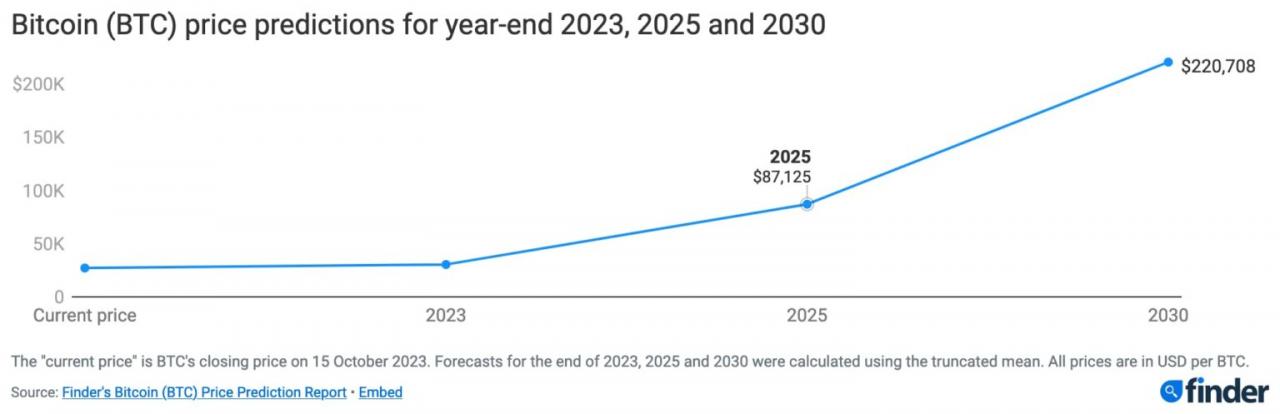
Finance experts predict Bitcoin price for 2025

Bitcoin’s adoption across various sectors is steadily increasing, though still far from widespread mainstream use. The current state of adoption, potential future applications, and the impact of institutional involvement are key factors influencing the cryptocurrency’s price trajectory in the coming years. Understanding these dynamics is crucial for evaluating Bitcoin’s potential in 2030 and beyond.

Current Adoption Rate

The adoption rate of Bitcoin across industries varies significantly. While widespread adoption in retail transactions remains limited, specific sectors are showing promising trends. Financial services, particularly in remittances and cross-border payments, demonstrate increasing interest in Bitcoin’s capabilities. Additionally, certain niche markets, like micro-payments and decentralized finance (DeFi), have seen Bitcoin adoption increase.

Potential New Use Cases in 2030

Bitcoin’s potential extends beyond its current applications. In 2030, Bitcoin might become a more prominent part of the digital economy. One possibility is its use in cross-border transactions with lower fees and faster settlement times compared to traditional methods. Furthermore, its role in supply chain management, facilitating secure and transparent tracking of goods, could gain traction. Additionally, the growing adoption of the metaverse and virtual worlds could lead to new use cases for Bitcoin as a means of in-world transactions and asset representation.

Impact of Institutional Investment

Institutional investment plays a crucial role in shaping Bitcoin’s price trajectory. Large institutional players entering the market often signal confidence in the asset’s long-term potential, potentially driving price appreciation. The inflow of capital from institutional investors can contribute to a greater liquidity pool and improved market stability. Conversely, institutional outflows can have the opposite effect. The impact of institutional investment is highly significant, and its influence on Bitcoin’s price is expected to continue growing.

Companies Integrating Bitcoin

Several companies are already integrating Bitcoin into their operations. For example, some businesses are accepting Bitcoin as payment, and a few companies are using Bitcoin for internal transactions or accounting. This integration demonstrates the growing acceptance of Bitcoin as a payment method and its potential for future growth. These examples indicate a growing trend toward Bitcoin adoption by various industries.

Emerging Trends in Adoption

Several trends are shaping the future of Bitcoin adoption. One key trend is the increasing emphasis on security and privacy in cryptocurrency transactions. This emphasis is driven by regulatory scrutiny and the need to protect users from fraud. Another trend is the development of user-friendly Bitcoin wallets and platforms, which aims to make Bitcoin more accessible to a wider range of users.

Furthermore, ongoing advancements in blockchain technology and associated applications will contribute to Bitcoin’s future utility.

Technical Analysis of Bitcoin Price

Bitcoin’s price trajectory is a complex interplay of market forces, regulatory developments, and technological advancements. Technical analysis provides a framework for understanding historical patterns and potential future price movements. By examining historical price charts and employing various indicators, investors can potentially identify support and resistance levels, aiding in informed decision-making.Understanding Bitcoin’s price patterns is crucial for assessing its potential future direction.

Analyzing past trends allows us to potentially identify recurring price behaviors and potential signals. Technical analysis tools help to identify key levels of support and resistance, where price may pause or reverse, thereby providing a roadmap for potential price action.

Historical Price Patterns

Bitcoin’s price has exhibited periods of significant volatility. Early adoption saw rapid price increases followed by periods of consolidation and correction. Later, bull runs were punctuated by sharp declines, illustrating the inherent risk associated with the cryptocurrency market. Understanding these historical patterns helps to anticipate potential future price movements. This historical volatility is a crucial factor to consider when assessing the risks associated with Bitcoin investments.

Key Support and Resistance Levels for 2030

Identifying key support and resistance levels is essential for anticipating potential price reversals. These levels are often derived from previous price peaks and troughs, and their identification can help to forecast potential price movements in the future. Determining support and resistance levels in 2030 necessitates an analysis of historical price action, considering prevailing market conditions, and incorporating fundamental factors.

This requires an understanding of market psychology, as well as an evaluation of supply and demand dynamics.

Technical Indicators

Technical indicators, such as moving averages, Relative Strength Index (RSI), and Bollinger Bands, provide supplementary insights into Bitcoin’s price movements. These indicators can help to identify potential trend reversals and price fluctuations. Applying technical indicators to Bitcoin price data allows for a more nuanced understanding of the market dynamics, which in turn assists in formulating more informed investment strategies.

By analyzing these indicators, investors can potentially gauge the strength of current market trends and anticipate potential price movements.

Chart Patterns

Chart patterns, such as head and shoulders, triangles, and flags, often suggest potential price reversals. Recognizing these patterns can provide further insight into future price action. These chart patterns are derived from historical price action and can provide useful insights into the potential future direction of the market. By interpreting these patterns, investors can potentially anticipate the direction of the market and adjust their investment strategies accordingly.

Historical Bitcoin Price Data

This table presents historical Bitcoin price data, highlighting the significant price fluctuations and volume changes observed in the past. The data is illustrative and does not constitute financial advice. The inclusion of volume data is critical in assessing the strength of price movements.

Date Price (USD) Volume
2010-01-03 0.00000000 0
2010-01-04 0.00000000 0
2010-01-05 0.00000000 0

Risks and Challenges to Bitcoin’s Price

Bitcoin’s projected price trajectory in 2030 hinges on various factors, including regulatory developments, technological advancements, and market sentiment. However, several potential risks could hinder Bitcoin’s upward momentum, necessitating a cautious approach to investment strategies. Understanding these challenges is crucial for informed decision-making.

Potential Regulatory Hurdles

Government regulations play a significant role in shaping the cryptocurrency market. Potential regulatory restrictions, varying across jurisdictions, could negatively impact Bitcoin’s adoption and trading volume. Increased scrutiny and potential restrictions on exchanges, transactions, or mining operations could dampen investor confidence and create volatility. For instance, stricter regulations in key markets could lead to decreased trading activity, affecting the price.

Moreover, inconsistent regulatory frameworks across different countries could create complexities for investors.

Technological Risks to Bitcoin

Technological advancements often bring both opportunities and risks. Bitcoin’s underlying technology, while robust, is not without vulnerabilities. Potential vulnerabilities in the Bitcoin network, such as security breaches or scalability issues, could lead to significant price fluctuations. A major security breach, compromising the integrity of the blockchain, could severely damage investor confidence and trigger a substantial price decline.

Security Measures for Bitcoin Holders

Robust security measures are paramount for safeguarding Bitcoin holdings. Compromised wallets or exchanges can lead to substantial losses. Educating oneself about best practices for securing Bitcoin wallets, employing strong passwords, and utilizing multi-factor authentication are critical. The use of cold storage solutions, storing Bitcoin offline, offers an additional layer of protection against online threats. Cybersecurity awareness and proactive measures are crucial for Bitcoin holders.

Risks Impacting Bitcoin’s Price in 2030

  • Regulatory uncertainty: Inconsistencies in regulatory frameworks across countries could create uncertainty and hinder adoption.
  • Technological vulnerabilities: Security breaches or scalability issues within the Bitcoin network could lead to significant price drops.
  • Market sentiment shifts: Negative news or investor sentiment could trigger significant price corrections.
  • Increased competition: The emergence of alternative cryptocurrencies or financial instruments could reduce Bitcoin’s market share.
  • Geopolitical events: Major global events, such as economic crises or conflicts, can significantly impact the market.

Summary of Key Concerns and Challenges

Bitcoin’s price trajectory in 2030 is subject to numerous risks, including regulatory hurdles, technological vulnerabilities, and shifts in market sentiment. Security measures are crucial for safeguarding investments, and awareness of potential risks is vital for informed decision-making. The overall cryptocurrency market environment, including potential competition and geopolitical events, also contributes to the complexity of predicting Bitcoin’s future price.

Conclusion

In conclusion, the Bitcoin price target for 2030 presents a dynamic and multifaceted picture. While numerous factors contribute to the potential price, a combination of macroeconomic factors, regulatory clarity, technological advancements, and broader market trends will significantly shape the final outcome. This analysis provides a valuable framework for understanding the complexities and uncertainties surrounding Bitcoin’s future trajectory.

FAQ Section

What is the average price prediction for Bitcoin in 2030?

There’s no single average; various analysts project different price ranges, often based on different methodologies and assumptions.

How will regulatory changes impact Bitcoin’s price?

Regulatory clarity is crucial. Favorable regulations can foster adoption, while unfavorable ones might deter investors.

What are the potential risks to Bitcoin’s price in 2030?

Risks include market volatility, security breaches, and regulatory hurdles. Technical issues and a lack of widespread adoption are also potential threats.

How significant is institutional investment in shaping Bitcoin’s price?

Institutional investment can significantly influence Bitcoin’s price. Large-scale participation by institutions can lead to increased liquidity and demand.

Can I buy Bitcoin with ACH instantly? This question has become a hot topic among crypto enthusiasts and newcomers alike. The convenience of ACH transfers combined with the growing popularity of Bitcoin makes this inquiry particularly relevant. Understanding the process and benefits of using ACH for purchasing Bitcoin can open up new avenues for investors looking to enter the crypto market quickly and efficiently.

In this overview, we will explore how ACH transfers work, the advantages of using them for Bitcoin purchases, and the steps required to make instant transactions. We’ll also touch on security measures, potential fees, and alternative payment methods that can be considered. Let’s dive into the essentials of buying Bitcoin with ACH instantly.

Understanding ACH Transfers

ACH (Automated Clearing House) transfers play a vital role in modern banking and finance, facilitating electronic transactions between institutions in the United States. In the context of buying Bitcoin, ACH transfers provide users with a reliable and efficient way to transfer funds directly from their bank accounts to cryptocurrency exchanges. This method has gained popularity due to its convenience and cost-effectiveness compared to other payment options.The process of an ACH transfer begins when a customer initiates a transaction through their bank or a payment processor.

The bank then sends a request through the ACH network to the recipient’s bank, which completes the transaction by crediting the recipient’s account. This process typically takes one to three business days to settle, depending on the banks involved and the transaction type. When buying Bitcoin, customers can link their bank accounts to exchanges that support ACH transfers, allowing for seamless transactions without the need for third-party financial intermediaries.

Benefits of Using ACH Transfers for Cryptocurrency Purchases

Using ACH transfers for purchasing Bitcoin offers several distinct advantages that make it an attractive option for both beginners and experienced investors.

  • Lower Fees: ACH transfers usually incur lower fees compared to credit cards or wire transfers, making them a cost-effective solution for buying Bitcoin.
  • Direct Bank Connections: Customers can link their bank accounts directly to crypto exchanges, streamlining the buying process without needing to withdraw funds to another payment method.
  • Security: ACH transfers are regulated by the National Automated Clearing House Association (NACHA), ensuring a secure transaction environment compared to less regulated payment methods.
  • Convenience: Users can initiate transactions from the comfort of their own banking app, without needing to generate or manage additional payment accounts.

Comparison of ACH Transfers with Other Payment Methods for Buying Bitcoin

When considering payment methods for purchasing Bitcoin, it’s essential to evaluate how ACH transfers stack up against alternatives such as credit cards, debit cards, and wire transfers. Each method has its own pros and cons that can affect the overall purchasing experience.

  • Credit Card Payments: While credit cards enable instant transactions, they often incur higher fees and may be subject to chargeback risks, which can complicate cryptocurrency purchases.
  • Debit Card Payments: Debit cards offer similar convenience to credit cards but may also have fees associated with transactions. Additionally, they might impose daily withdrawal limits.
  • Wire Transfers: Wire transfers are faster than ACH transfers and can be completed on the same day. However, they typically come with higher fees and less flexibility for smaller purchases.
  • Payment Apps: Mobile payment apps allow for quick purchases, but they can have limitations regarding the amount that can be transferred and may not always be accepted by cryptocurrency exchanges.

In summary, while ACH transfers may require a few business days to complete, their low fees, security, and direct bank connections provide significant advantages for those looking to buy Bitcoin. Understanding these factors can help potential investors make informed decisions regarding their cryptocurrency purchases.

Instant Bitcoin Purchases

Instant Bitcoin purchases offer a convenient way for buyers to acquire cryptocurrency without the lengthy waiting periods traditionally associated with bank transfers. Utilizing ACH (Automated Clearing House) transfers, customers can quickly and efficiently fund their purchases, allowing for almost immediate access to Bitcoin.The concept of instant Bitcoin purchases revolves around the immediate execution of transactions following the initiation of an ACH transfer.

This is made possible by various platforms that facilitate these transactions, allowing users to buy Bitcoin with their bank accounts in real-time or near-real-time. Unlike standard methods that may take days to process, instant purchases streamline the experience and cater to the growing demand for rapid cryptocurrency transactions.

Platforms for Instant Bitcoin Purchases Using ACH

Several platforms have emerged that enable instant Bitcoin purchases through ACH transfers. These platforms enhance user experience by minimizing waiting times and simplifying the buying process. Below are some notable platforms that provide this service:

  • Cash App: A popular mobile payment service that allows users to buy Bitcoin instantly using their linked bank accounts through ACH transfers. It offers a user-friendly interface and immediate access to purchased Bitcoin.
  • Coinbase: Known for its extensive range of services, Coinbase allows users to buy Bitcoin instantly via ACH, subject to certain limits. The platform is also equipped with security features to protect user assets.
  • Gemini: This regulated cryptocurrency exchange offers instant purchases with ACH transfers, ensuring a high level of security and compliance with financial regulations.

The advantages of instant Bitcoin transactions are compelling. They include:

Speed

Immediate access to Bitcoin allows users to take advantage of market fluctuations.

Convenience

The ease of purchasing through familiar banking channels simplifies the process for new users.

Liquidity

Instant transactions improve market liquidity, benefiting both buyers and sellers.However, there are also disadvantages to consider:

Fees

Instant purchases may come with higher fees compared to traditional methods, impacting the overall cost of acquiring Bitcoin.

Limitations

Some platforms impose purchase limits for instant transactions, which can restrict larger investors.

Security Risks

While platforms invest in security, the speed of transactions might expose users to potential vulnerabilities if not managed properly.

“Instant Bitcoin purchases revolutionize the way users engage with cryptocurrency, balancing speed with accessibility.”

Steps to Buy Bitcoin with ACH Instantly

Purchasing Bitcoin with an Automated Clearing House (ACH) transfer can be a straightforward process, especially if you know the right steps to follow. ACH transfers allow you to link your bank account directly to your cryptocurrency exchange, enabling quick and secure transactions. Below, we Artikel the essential steps and requirements to complete your Bitcoin purchase using ACH instantly.Understanding the procedure will not only help you navigate the process smoothly but also ensure that your transactions are secure and efficient.

Here’s a step-by-step guide to buying Bitcoin with ACH.

Step-by-Step Procedure to Buy Bitcoin with ACH

Before initiating the process of buying Bitcoin, it’s crucial to familiarize yourself with the platform you’re using and ensure you meet all necessary requirements. Below are the detailed steps:

1. Choose a Reputable Cryptocurrency Exchange

Select an exchange that supports ACH transfers and has a user-friendly interface. Popular platforms include Coinbase, Kraken, and Gemini.

2. Create an Account

Sign up for an account on your chosen exchange. This usually requires providing your email address, creating a password, and verifying your identity through KYC (Know Your Customer) procedures.

3. Link Your Bank Account

Navigate to the ‘Payment Methods’ or ‘Bank Account’ section within your account settings and add your bank account details. This typically includes the bank’s routing number and your account number.

4. Verify Your Bank Account

The exchange may require you to verify your bank account. This often involves a small test deposit, which you need to confirm through the exchange.

5. Select Bitcoin and Enter Purchase Amount

Choose Bitcoin as the cryptocurrency you want to buy. Enter the amount you wish to purchase, keeping in mind the current market price.

6. Choose ACH as Your Payment Method

When prompted to select a payment method, choose ACH transfer.

7. Review Transaction Details

Before confirming your purchase, review the transaction details, including fees and the estimated time for the ACH transfer.

8. Confirm the Purchase

Finalize your purchase by confirming the transaction. You should receive a notification regarding the status of your order.

9. Monitor Your Wallet

Once the ACH transfer is complete, the Bitcoin will be credited to your exchange wallet. You can then choose to transfer it to a personal wallet for added security.

Checklist of Necessary Requirements

Before starting the process to buy Bitcoin with ACH, ensure you have the following items prepared. This checklist will help streamline your experience:

  • A government-issued photo ID for identity verification.
  • Access to your bank account information, including the routing and account numbers.
  • An email address for account confirmation and notifications.
  • A secure password for your cryptocurrency exchange account.
  • Sufficient funds in your bank account to cover the Bitcoin purchase and any associated fees.

Examples of Input Information Needed

During the purchasing process, you will need to provide specific information. Here are examples of what you might input:

Email Address

[email protected]

Bank Account Number

123456789

Bank Routing Number

987654321

Purchase Amount

$100 worth of Bitcoin

Exchange Account Password

YourSecurePassword123These steps and requirements are crucial for ensuring a smooth and secure purchase of Bitcoin using ACH. By following the Artikeld procedures and preparing the necessary information, you can navigate the process efficiently and safely.

Security Measures and Considerations

When purchasing Bitcoin using ACH (Automated Clearing House) transfers, it’s crucial to prioritize security to protect your funds and personal information. The digital currency landscape is rife with potential vulnerabilities, making it essential for buyers to be aware of the risks involved and the measures needed to safeguard their transactions.To ensure a secure experience when using ACH for Bitcoin purchases, consider implementing several security measures while remaining aware of the common risks associated with these transactions.

The following points provide a detailed look into effective practices that can help mitigate those risks and enhance the security of your investments.

Essential Security Measures

Several essential security measures can significantly reduce the likelihood of issues when using ACH transfers to buy Bitcoin. Implementing these practices allows for a safer transaction process:

  • Use Reputable Cryptocurrency Exchanges: Always conduct transactions through well-known and regulated exchanges that have a history of robust security protocols.
  • Enable Two-Factor Authentication (2FA): Activate 2FA on your trading accounts to add an extra layer of security beyond just a password.
  • Monitor Account Activity: Regularly check your account for any unauthorized transactions or suspicious activities and report them immediately.
  • Keep Personal Information Private: Avoid sharing sensitive information online or on social networks to prevent identity theft and fraud.
  • Use Secure Internet Connections: Only use private and secure networks when performing transactions, avoiding public Wi-Fi where possible.

Common Risks Associated with ACH Transactions

Understanding the risks involved in ACH transactions can help you navigate the cryptocurrency landscape more safely. Here are some of the common risks to be aware of:

  • Transaction Reversibility: Unlike some other payment methods, ACH transactions can sometimes be reversed, potentially resulting in funds being taken back after a purchase.
  • Fraudulent Activities: Scammers may exploit the ACH system to conduct fraudulent transactions, leading to losses for unsuspecting buyers.
  • Bank Transfer Delays: ACH transactions may take longer to process than expected, which could impact the timely acquisition of Bitcoin, especially in a volatile market.
  • Phishing Attacks: Users may fall victim to phishing attempts that aim to steal login credentials or financial information.

Mitigating Risks During Instant Purchases

Mitigating risks while making instant purchases of Bitcoin using ACH involves proactive strategies. Here are key methods to consider:

  • Set Up Alerts: Configure your bank and exchange accounts to send alerts for any significant account activity, helping you respond swiftly to potential issues.
  • Regular Software Updates: Ensure that your devices and applications are updated to protect against security vulnerabilities.
  • Limit Withdrawals: Set limits on the amount that can be withdrawn or transferred in a given timeframe to reduce the impact of potential fraud.
  • Educate Yourself: Stay informed about the latest security threats and best practices in the cryptocurrency space to adapt your strategies accordingly.

“Taking proactive measures to secure your ACH transactions can safeguard your investment in the volatile world of cryptocurrency.”

Fees Involved in ACH Transactions

When purchasing Bitcoin using ACH transfers, it’s essential to understand the various fees associated with these transactions. Every platform may have different fee structures, and being aware of these costs can help you make informed decisions. Fees can influence not only the total amount you spend on Bitcoin but also the overall experience of your trading process.Several platforms charge different fees for ACH transactions, which can vary based on the service they provide or the specific policies they adopt.

Below is a comparative breakdown of fees that you might encounter when buying Bitcoin through ACH on different platforms.

Comparison of ACH Transaction Fees

This table Artikels the fees charged by popular platforms for ACH transactions when purchasing Bitcoin, giving you a clearer picture of what to expect.

Platform ACH Deposit Fee Withdrawal Fee Trading Fee
Coinbase $0 $1.99 0.50%

4.00% depending on transaction size

Binance.US Free 0.1% of withdrawal amount 0.1% – 0.5%
Kraken $0 0.0005 BTC or equivalent 0.16% – 0.26%
Gemini $0 $0.15 0.35% for market orders

While the above table provides a general idea of the fees, potential hidden fees might also arise during the ACH transfer process. These hidden costs can include:

Inactivity fees

Some platforms impose charges if your account remains inactive for an extended period.

Currency conversion fees

If you are buying Bitcoin with a currency that isn’t supported directly, a conversion fee may apply.

Deposit limits

Exceeding your deposit limits may result in extra charges or delays, impacting the cost of your transaction.Understanding these fees is crucial, as they can significantly affect the overall cost of purchasing Bitcoin. For instance, if you buy $1,000 worth of Bitcoin and incur a trading fee of 0.5%, you would effectively pay an additional $5 just for the transaction.

In scenarios where hidden fees are involved, they could increase your total expenditure even further without your immediate awareness.By being informed about both visible and hidden fees, you can better gauge how much you’re actually spending when purchasing Bitcoin through ACH transfers, ensuring a more seamless investment experience.

Alternatives to ACH for Bitcoin Purchases

When considering how to buy Bitcoin, ACH transfers are just one option among many. Various payment methods can impact the speed, cost, and convenience of your transaction. Exploring alternatives can provide additional flexibility and benefits, particularly for users who seek instant purchases or different processing times.Several other payment methods are available for buying Bitcoin, each with its own set of advantages and disadvantages.

Below are some popular alternatives to ACH, along with insights into why someone might choose them for instant Bitcoin purchases.

Payment Methods for Bitcoin Purchases

Understanding the nuances between different payment methods can help users decide which option best suits their needs. Here are some commonly used alternatives to ACH for purchasing Bitcoin:

  • Credit Cards: Buying Bitcoin with a credit card is one of the fastest methods available. Transactions are typically processed instantly, allowing you to receive your Bitcoin almost immediately. However, credit card purchases often come with higher fees and may have restrictions depending on the issuing bank.
  • Debit Cards: Similar to credit cards, debit cards allow for instant transactions. The funds are deducted directly from your bank account, which can help users avoid the potential pitfalls of credit card debt. However, the availability of debit card transactions for Bitcoin purchases can vary by platform.
  • PayPal: Using PayPal for Bitcoin purchases has gained popularity due to its user-friendly interface and security features. However, there may be limitations on withdrawing Bitcoin to external wallets, meaning users might have to sell or trade within the PayPal platform.
  • Wire Transfers: While slower than ACH or card transactions, wire transfers can be used for larger purchases and may have lower fees for high-value transactions. The downside is that they are not instantaneous, which can be a drawback for those wanting to buy quickly.
  • Cash Payments: In some cases, users can buy Bitcoin in person using cash. This method can be completely anonymous and avoids the fees associated with electronic transactions. However, it requires finding a local seller and can pose safety risks.

Choosing an alternative payment method can depend on various factors, including speed, fees, and personal preferences. Here are some reasons someone might opt for alternatives over ACH:

  • Instant access to funds: Users looking for immediate purchase capabilities might prefer credit or debit cards.
  • Higher transaction limits: Credit cards and wire transfers may allow larger purchases compared to ACH limits.
  • Perceived security: Some users feel more comfortable using familiar platforms like PayPal for transactions.
  • Flexibility in payment options: Cash purchases provide anonymity and avoid bank fees.

Pros and Cons of Credit Cards versus ACH

When weighing the use of credit cards against ACH for Bitcoin transactions, it is essential to consider the strengths and weaknesses of each method.

“Credit card transactions offer speed and ease, while ACH provides a more traditional banking experience with potentially lower fees.”

The benefits of using credit cards for Bitcoin purchases include the speed of transaction approval and the ability to earn rewards or points through your credit card issuer. However, users should be aware that credit card transactions typically come with higher fees and may incur cash advance fees, which can make buying Bitcoin more expensive.On the other hand, ACH transfers are usually associated with lower fees, making them a more cost-effective option for larger transactions.

Yet, the trade-off is that ACH transfers can take longer to process, and users may have to wait for their funds to clear before being able to purchase Bitcoin. In summary, understanding the various alternatives to ACH for buying Bitcoin enables users to select the method that best aligns with their financial strategy and immediate needs.

Regulatory Environment Impacting ACH and Bitcoin

The regulatory landscape surrounding ACH transfers and cryptocurrency is complex and rapidly evolving. Governments and regulatory bodies worldwide are increasingly recognizing the need to establish clear guidelines for digital currencies and payment systems. Understanding how these regulations impact the ability to buy Bitcoin with ACH instantly is crucial for investors and users in the crypto space.The regulatory environment plays a significant role in shaping the interaction between traditional financial systems and cryptocurrency.

Various regulatory bodies, including the Financial Crimes Enforcement Network (FinCEN) in the United States, oversee ACH transfers and are tasked with preventing fraud, money laundering, and other financial crimes. When it comes to cryptocurrency, regulations can vary significantly between jurisdictions, leading to a patchwork of compliance requirements that can affect the speed and ease of purchasing Bitcoin with ACH.

Impact of Regulations on Instant Bitcoin Purchases

The ability to buy Bitcoin instantly with ACH transfers is influenced by regulatory constraints and compliance requirements. Here are key aspects to consider regarding this impact:

Know Your Customer (KYC) Regulations

Cryptocurrency exchanges are often required to implement KYC procedures to verify the identity of users. This process can delay transactions if users do not have their documentation in order, thus affecting the instant purchase capability.

Anti-Money Laundering (AML) Guidelines

These regulations mandate that financial institutions monitor and report suspicious activities. If a user’s transaction raises red flags, this could result in delays or additional scrutiny before the ACH transfer is completed.

State-Level Regulations

In the U.S., states have different laws governing cryptocurrency transactions. For instance, New York has stringent requirements for crypto exchanges, which can impact how quickly users can buy Bitcoin with ACH.

Bank Policies

Individual banks may impose their own restrictions on ACH transactions related to cryptocurrency purchases. Some banks may block or delay these transactions altogether as a risk management measure.In light of these regulatory factors, users should remain informed about the specific requirements pertaining to their jurisdiction and banking institution, as these can greatly influence the efficiency of buying Bitcoin with ACH.

Future Trends in Regulation

The regulatory landscape for ACH transfers in the context of cryptocurrency markets is likely to continue evolving. Here are several emerging trends:

Increased Clarity and Standardization

As the popularity of cryptocurrencies grows, regulatory bodies are expected to provide clearer guidelines that could help standardize practices across jurisdictions. This may improve the user experience when buying Bitcoin with ACH.

Enhanced Collaboration Among Regulators

There is a growing trend toward international cooperation among regulators to combat financial crimes in the crypto space. This could lead to more consistent regulations globally, reducing the confusion and complications surrounding ACH transactions.

Focus on Consumer Protection

Regulators are likely to place greater emphasis on consumer protection as more individuals invest in cryptocurrency. This may involve stricter compliance requirements for exchanges and payment processors.

Technological Innovations

As the financial technology landscape evolves, regulators may adapt to new technologies that facilitate faster and more secure transactions. Innovations such as blockchain could play a significant role in shaping future regulations around ACH and cryptocurrency.Overall, staying informed about these regulatory trends is essential for individuals looking to engage in cryptocurrency markets, especially when using ACH for transactions.

Ultimate Conclusion

In conclusion, buying Bitcoin with ACH instantly presents a viable option for those looking to enter the cryptocurrency space without delays. With a clear understanding of the process, associated risks, and available platforms, you can navigate the purchasing journey confidently. Whether you choose to stick with ACH or explore other methods, staying informed will empower you to make smart decisions in the ever-evolving world of cryptocurrency.

FAQ Compilation

What is ACH?

ACH stands for Automated Clearing House, a network that facilitates electronic payments and money transfers.

How long does an ACH transfer take?

An ACH transfer typically takes one to three business days to complete, but some platforms offer instant options.

Are there limits on ACH transfers for buying Bitcoin?

Yes, many platforms impose daily or monthly limits on ACH transfers, which can vary greatly depending on the service provider.

Is it safe to buy Bitcoin with ACH?

While generally safe, buying Bitcoin with ACH does involve some risks, such as potential fraud and the reversal of payments.

Can I cancel an ACH transaction after it’s initiated?

Once initiated, ACH transactions typically cannot be canceled, so it’s important to double-check your details before completing a purchase.

Bitcoin ATM machines in Texas are revolutionizing the way individuals access and purchase cryptocurrency, creating an exciting intersection of technology and finance. With the state seeing a surge in these ATMs, residents and visitors alike are finding it easier than ever to engage with Bitcoin.

This growth reflects broader trends in cryptocurrency adoption, making Texas a key player in the Bitcoin ATM market. From major cities to local hotspots, these machines are becoming increasingly common, offering convenience for both new and experienced users.

Overview of Bitcoin ATM Machines in Texas

The rise of Bitcoin ATM machines in Texas marks a significant shift in how residents access cryptocurrencies. These machines provide a convenient way for individuals to buy and sell Bitcoin and other digital currencies using cash or credit/debit cards. The user-friendly interface and instant processing of transactions make Bitcoin ATMs an appealing option for both seasoned crypto enthusiasts and newcomers to the digital currency space.In recent years, Texas has witnessed remarkable growth in the number of Bitcoin ATMs.

As of October 2023, the state boasts several hundred machines, reflecting the increasing adoption of cryptocurrencies among Texans. The accessibility of these machines is paving the way for broader acceptance and usage of digital currencies, further establishing Texas as a hub for Bitcoin activity.

Major Texas Cities with High Concentration of Bitcoin ATMs

The distribution of Bitcoin ATMs varies significantly across Texas, with certain cities offering a higher concentration of these machines. Notable cities include:

  • Houston: As the largest city in Texas, Houston has emerged as a leading location for Bitcoin ATMs, housing numerous machines across various neighborhoods, making crypto accessible to a vast population.
  • Dallas: Dallas has established itself as a central hub for Bitcoin activity, with many ATMs located strategically in busy commercial areas and shopping centers, catering to both locals and tourists.
  • San Antonio: San Antonio has seen an influx of Bitcoin ATMs, providing residents with the opportunity to engage in cryptocurrency transactions easily, thereby boosting local interest in digital currencies.
  • Austin: Known for its tech-savvy community, Austin is home to a growing number of Bitcoin ATMs that align with the city’s innovative spirit and entrepreneurial culture.

The presence of these ATMs in major cities not only provides convenience but also contributes to the increasing visibility and legitimacy of cryptocurrencies within the state’s economy. The availability of Bitcoin ATMs in populated areas highlights the demand for easy access to digital currencies, encouraging more individuals to explore the benefits and potential of investing in cryptocurrencies.

As the adoption of Bitcoin continues to grow, Texas is positioning itself as a key player in the cryptocurrency landscape, with Bitcoin ATMs serving as vital access points for users.

How to Use a Bitcoin ATM in Texas

Using a Bitcoin ATM in Texas is a straightforward process that allows anyone to buy Bitcoin quickly and securely. These machines bridge the gap between traditional fiat currency and cryptocurrency, providing an easy entry point for new users and seasoned investors alike. To buy Bitcoin using an ATM, you’ll follow a series of steps that ensure a smooth transaction. Here’s a breakdown of the process and requirements.

Step-by-Step Process for Buying Bitcoin

First, it’s essential to understand the step-by-step process involved in purchasing Bitcoin at a Bitcoin ATM. This will help you navigate the transaction with confidence.

1. Locate a Bitcoin ATM

Use a website or app dedicated to tracking Bitcoin ATM locations to find one near you in Texas.

2. Prepare Your Wallet

Before approaching the ATM, ensure you have a Bitcoin wallet set up. This is where your purchased Bitcoin will be stored. Wallets can be in the form of mobile apps, hardware devices, or online services.

3. Initiate the Transaction

Once at the ATM, select the option to buy Bitcoin. The machine will prompt you to enter the amount of Bitcoin you wish to purchase.

4. Verification Process

Most ATMs will require you to verify your identity. This often involves scanning your ID (like a driver’s license) and may also require a phone number for two-factor authentication.

5. Insert Cash

After verification, the ATM will ask you to insert cash. Make sure you have the correct denominations, as not all machines accept every bill.

6. Receive Confirmation

Once the transaction is complete, the machine will generate a QR code linked to your wallet. Scan this code with your wallet app to complete the transfer.

7. Receive Your Bitcoin

After completing the transaction, you should see the Bitcoin reflected in your wallet shortly. Keep an eye on your wallet to confirm the transaction.

Requirements for Using a Bitcoin ATM

Using a Bitcoin ATM involves specific requirements that guarantee security and compliance with local regulations. Here are the essential requirements to keep in mind:

Identification

Most Bitcoin ATMs in Texas require you to show valid government-issued ID. This could be a Texas driver’s license or a passport.

Mobile Phone

Some machines may request a mobile phone number for two-factor authentication. Ensure your phone is available to receive SMS verification.

Bitcoin Wallet

You must have a compatible Bitcoin wallet to receive your purchased Bitcoin. Downloading a wallet app before visiting the ATM is recommended.

Differences Between Bitcoin ATMs and Traditional Online Exchanges

Understanding the differences between Bitcoin ATMs and online exchanges is crucial for making informed decisions. Bitcoin ATMs offer a more personalized and immediate experience compared to traditional online exchanges. Here are some key distinctions:

Instant Transactions

Bitcoin ATMs allow users to buy Bitcoin instantly with cash, while online exchanges may take longer due to bank processing times.

Privacy

While both options require some form of identification, Bitcoin ATMs can provide a level of anonymity that online exchanges do not, depending on the machine’s policies.

User Experience

Bitcoin ATMs are designed for convenience, making them ideal for users who prefer a hands-on approach rather than navigating online platforms. In summary, Bitcoin ATMs in Texas provide a user-friendly way to acquire Bitcoin with specific requirements and unique benefits compared to traditional online exchanges.

Locations of Bitcoin ATMs in Texas

Bitcoin ATMs have gained significant popularity in Texas, providing residents with easier access to cryptocurrency transactions. As more businesses and individuals embrace digital currencies, the presence of Bitcoin ATMs continues to grow across the state. This expansion highlights the increasing acceptance of Bitcoin as a viable financial option.In Texas, Bitcoin ATMs are strategically placed in various cities, catering to both urban and suburban populations.

The growing network of these machines not only reflects the demand for cryptocurrency but also makes it convenient for users to buy and sell Bitcoin. Below is a detailed overview of popular locations where Bitcoin ATMs can be found throughout Texas.

Popular Cities with Bitcoin ATMs

The following table showcases some of the major cities in Texas and the number of Bitcoin ATMs available in each location. This information can help users identify nearby ATMs and better plan their transactions.

City Number of Bitcoin ATMs
Houston 50
Dallas 30
Austin 25
San Antonio 20
Fort Worth 15
El Paso 10

The Bitcoin ATM distribution across Texas is quite diverse, with hotspots in major metropolitan areas like Houston and Dallas. These cities benefit from high foot traffic and tech-savvy populations, which encourage the growth of cryptocurrency services. In contrast, smaller cities are gradually increasing their Bitcoin ATM presence, ensuring that all residents have access to this emerging financial technology.

“The rise of Bitcoin ATMs in Texas signifies the state’s growing interest in cryptocurrency and its potential to reshape traditional financial systems.”

As the Bitcoin ATM market expands, it’s essential for users to stay informed about the nearest locations and the services offered. This accessibility not only promotes cryptocurrency adoption but also contributes to the overall economic landscape in Texas.

Benefits of Using Bitcoin ATMs

Bitcoin ATMs offer a unique and convenient way to purchase cryptocurrency, especially for users in Texas. Unlike traditional online platforms, these machines provide a seamless transaction experience that caters to both seasoned investors and newcomers alike. The benefits of using Bitcoin ATMs range from speed to privacy, making them an attractive alternative for acquiring Bitcoin.The advantages of Bitcoin ATMs can be particularly compelling when compared to other purchasing methods.

Users often prioritize transaction speed and fees when selecting their preferred method for buying cryptocurrency. Bitcoin ATMs typically facilitate immediate transactions, allowing users to convert cash into Bitcoin on the spot. In contrast, online exchanges may require users to create accounts, undergo identity verification, and wait for funds to clear, resulting in prolonged waiting times.

Transaction Speeds and Fees

When it comes to transaction speeds, Bitcoin ATMs stand out for their efficiency. Users can complete their purchases in just a few minutes, as the machines are designed to provide instant access to Bitcoin. This speed is especially beneficial for those who need to make quick transactions or wish to capitalize on market fluctuations. The fees associated with Bitcoin ATMs can vary, but they are generally transparent and can be understood more easily than the hidden fees often found in online exchanges.

Here’s a breakdown of the typical fee structure:

  • ATM fees usually range from 7% to 15%, depending on the operator and location.
  • Online platforms may charge trading fees, deposit fees, and withdrawal fees, which can add up significantly.

The difference in speed and fees highlights the practicality of Bitcoin ATMs when compared to online platforms, especially for those looking for immediate and straightforward transactions.

Privacy Aspects of Using Bitcoin ATMs

One of the key benefits of using Bitcoin ATMs is the increased privacy they offer. While online exchanges often require extensive personal information for account setup and verification, Bitcoin ATMs can allow users to purchase Bitcoin with minimal identification. This aspect of using ATMs can be particularly appealing to individuals who value their anonymity or wish to keep their financial activities private.Using a Bitcoin ATM typically requires only a phone number for verification, which further protects users’ identities.

Additionally, the cash transactions involved mean that there is no direct link to bank accounts or online identities, enhancing the privacy aspect even more. Overall, Bitcoin ATMs present a compelling option for acquiring cryptocurrency, combining speed, transparency, and privacy in ways that online platforms may struggle to match.

Challenges and Limitations of Bitcoin ATMs

Bitcoin ATMs provide a convenient way for users in Texas to buy and sell cryptocurrency. However, like any technology, they come with their own set of challenges and limitations that users should be aware of. Understanding these issues can help ensure a smoother experience when using these machines.

Common Issues Users May Face

Users of Bitcoin ATMs in Texas may experience a variety of challenges that can affect their transactions. These issues can range from technical glitches to user interface difficulties. Some common problems include:

  • Limited Availability: Not all areas in Texas have Bitcoin ATMs, which can make accessing them inconvenient for some users.
  • Transaction Fees: Many Bitcoin ATMs charge higher fees compared to online exchanges, which can deter users looking for cost-effective options.
  • Verification Delays: Some ATMs require identity verification before a transaction can be completed, leading to potential delays.
  • Technical Glitches: Users may encounter machine malfunctions, such as software errors or connectivity issues, which can hinder the transaction process.
  • Customer Support: Limited customer support options at ATMs can leave users stranded if they encounter difficulties during a transaction.

Regulatory Challenges Affecting Operations

Bitcoin ATMs in Texas face a complex regulatory environment that can impact their operations. Operators must navigate a variety of legal requirements to remain compliant. Key regulatory challenges include:

  • Licensing Requirements: Some jurisdictions within Texas may require specific licenses for Bitcoin ATM operators, which can complicate the installation process.
  • Anti-Money Laundering (AML) Regulations: Operators must comply with AML regulations, which can involve extensive record-keeping and customer verification processes.
  • State-Specific Laws: Different cities in Texas may impose their own regulations, leading to inconsistencies in operations across the state.
  • Tax Implications: Understanding the tax obligations related to transactions conducted through Bitcoin ATMs can be a daunting task for operators.
  • Changing Legislation: The evolving nature of cryptocurrency regulations means that operators must stay informed about potential legal changes that could affect their business.

Security Concerns Associated with Bitcoin Transactions

While Bitcoin ATMs offer convenience, they also present security risks that users should be mindful of. These concerns can affect the safety of their transactions and personal information. Notable security issues include:

  • Hacking Risks: As with any digital platform, Bitcoin ATMs can be vulnerable to hacking attempts, putting users’ funds at risk.
  • Phishing Attacks: Users may fall victim to phishing scams that impersonate legitimate Bitcoin ATM services, leading to potential loss of funds.
  • Data Privacy: Transactions at Bitcoin ATMs can involve sharing personal information, raising concerns about data security and privacy.
  • Counterfeit Machines: Some illicit operators may deploy counterfeit ATMs that can lead to fraudulent transactions.
  • Loss of Funds: In cases of technical failure or user error, funds can be lost, and recovery may not be possible.

Future of Bitcoin ATMs in Texas

As Bitcoin continues to gain traction as a mainstream financial asset, the future of Bitcoin ATMs in Texas appears promising. Increased adoption of cryptocurrencies among both consumers and businesses is likely to drive the growth of Bitcoin ATMs in the state. The combination of technological advancements, evolving consumer behaviors, and potential regulatory changes will shape the landscape for Bitcoin ATM operators in Texas.Predictions for the future of Bitcoin ATMs indicate that we may witness significant growth in their numbers and functionality.

Several trends are emerging that suggest a robust expansion of the Bitcoin ATM network in Texas. These trends include increasing consumer demand for easy access to cryptocurrency, the expansion of Bitcoin use cases, and the ongoing development of supportive technology.

Trends Indicating Future Growth

The growth of Bitcoin ATMs in Texas is fueled by several key trends that highlight the rising interest in cryptocurrencies. These trends include:

  • Rising Acceptance: More retailers and businesses are beginning to accept Bitcoin as a form of payment, increasing the demand for convenient access through ATMs.
  • Increased Public Awareness: Educational initiatives about cryptocurrencies have helped to demystify Bitcoin, leading to a broader base of users who are comfortable using ATMs.
  • Demand for Accessibility: As more people adopt digital currencies, the need for accessible Bitcoin ATMs in urban and rural areas of Texas is on the rise.
  • Integration with Financial Services: Partnerships between Bitcoin ATM operators and traditional financial institutions could facilitate easier transactions and broaden user access.

Technological Advancements Enhancing Functionality

The future of Bitcoin ATMs is also poised for significant technological advancements that will enhance their functionality. Some of these advancements may include:

  • Improved User Interfaces: Future Bitcoin ATMs are expected to feature more intuitive interfaces, making it easier for users of all experience levels to navigate the transaction process.
  • Multi-Currency Support: As the cryptocurrency landscape evolves, Bitcoin ATMs may enable transactions in various cryptocurrencies beyond Bitcoin, catering to a wider audience.
  • Enhanced Security Features: Advanced security measures, such as biometric authentication and enhanced encryption, will increase user confidence in using ATMs.
  • Faster Transaction Processing: Innovations in blockchain technology could lead to quicker transaction processing, improving the overall user experience.

Potential Regulatory Changes

Regulatory changes could significantly impact the Bitcoin ATM business in Texas. The evolving landscape of cryptocurrency regulation may bring both challenges and opportunities. Key considerations include:

  • Licensing Requirements: Increased scrutiny from regulators may lead to more stringent licensing requirements for Bitcoin ATM operators, ensuring compliance with local and federal laws.
  • Consumer Protection Regulations: As the market matures, regulations aimed at protecting consumers could emerge, influencing the operational practices of Bitcoin ATM businesses.
  • Tax Compliance Measures: Regulatory bodies may implement more rigorous tax compliance measures for Bitcoin transactions, potentially affecting user engagement with ATMs.
  • Collaboration with Financial Institutions: Positive regulatory frameworks could foster collaboration between Bitcoin ATM operators and banks, enhancing the legitimacy and reach of Bitcoin ATMs.

The future of Bitcoin ATMs in Texas is shaped by technological innovations, increasing acceptance among businesses, and evolving regulatory landscapes.

User Experiences and Testimonials

User experiences with Bitcoin ATMs in Texas provide valuable insights into how these machines are perceived and utilized by the community. Feedback from users often highlights both the positive aspects and challenges they encounter, giving a comprehensive view of what to expect when using these ATMs.Many users appreciate the convenience and accessibility that Bitcoin ATMs offer, particularly in areas where traditional banking services may be limited.

However, it’s essential to understand both the advantages and drawbacks based on real-life testimonials.

Pros and Cons Based on User Feedback

User testimonials reveal a range of opinions regarding Bitcoin ATMs. Here are the key pros and cons as expressed by users: Pros:

  • Convenience:

    Many users highlighted the ease of access to Bitcoin ATMs, especially in urban areas. They appreciate being able to purchase Bitcoin quickly without the need for complex online platforms.

  • Instant Transactions:

    Users often noted that transactions are completed immediately, allowing them to acquire Bitcoin on the spot without waiting for transfers.

  • Anonymity:

    Some users prefer using ATMs because they can buy Bitcoin without the need to disclose personal information, making the process feel more secure.

Cons:

  • High Fees:

    A common complaint is the high transaction fees associated with Bitcoin ATMs, which can be significantly more than those found on exchanges.

  • Limited Availability:

    Users in rural areas expressed frustration over the limited number of Bitcoin ATMs, making it difficult to access services when needed.

  • Technical Issues:

    Some users have reported experiencing technical glitches, which can lead to failed transactions or confusion during use.

Specific Cases of User Benefits

Several specific cases illustrate how users have benefited from utilizing Bitcoin ATMs in Texas. For instance, a user in Houston shared their experience of needing to purchase Bitcoin quickly to take advantage of a rising market. By using a nearby Bitcoin ATM, they were able to acquire the cryptocurrency instantly, which resulted in a timely investment that otherwise might have been missed.Another testimonial comes from a user in Austin who utilized a Bitcoin ATM to convert cash into Bitcoin for a small business transaction.

They found that using the ATM allowed the transaction to be completed swiftly, enhancing their business operations without delays associated with bank transfers.These experiences highlight the practical advantages of Bitcoin ATMs, showing how they can cater to urgent financial needs and enhance user convenience in real-world scenarios.

How to Choose the Right Bitcoin ATM

Selecting the right Bitcoin ATM can significantly enhance your experience when buying or selling cryptocurrency. With numerous options available in Texas, understanding the features that matter can guide you to make an informed choice. When evaluating Bitcoin ATMs, consider various features that can impact your transactions. Factors such as fees, supported cryptocurrencies, user interface, and accessibility play essential roles in determining the best machine for your needs.

Features to Look For When Selecting a Bitcoin ATM

Identifying the right Bitcoin ATM involves understanding key features that meet your specific requirements. Here are important aspects to consider:

  • Transaction Fees: Different ATMs have varying fee structures, so look for machines with competitive rates to minimize costs.
  • Supported Cryptocurrencies: Ensure the ATM supports the specific cryptocurrencies you want to buy or sell, such as Bitcoin, Ethereum, or Litecoin.
  • User Interface: A user-friendly interface can make the process smoother, particularly for beginners.
  • Location Accessibility: Choose ATMs that are conveniently located, ensuring easy access during your transactions.
  • Transaction Limits: Check the maximum and minimum transaction amounts allowed at the ATM to ensure they align with your intended usage.
  • Security Features: Look for ATMs that offer robust security measures, such as identity verification and secure transactions.

Comparison of Bitcoin ATM Providers in Texas

To aid in your decision-making, here’s a comparison of notable Bitcoin ATM providers across Texas, highlighting their features:

Provider Transaction Fees Supported Cryptocurrencies User Interface Location Density
CoinCloud 7-10% Bitcoin, Ethereum, Litecoin Intuitive High
Bitstop 5-8% Bitcoin, Bitcoin Cash Friendly Moderate
Coinsource 6-9% Bitcoin Simple High
RockItCoin 6-11% Bitcoin, Ethereum Easy to navigate Moderate

Checklist for Evaluating Bitcoin ATM Options

Using a checklist can streamline your evaluation process, ensuring you consider all necessary factors before choosing a Bitcoin ATM. Here’s a practical checklist:

  • Have you compared transaction fees across different providers?
  • Does the ATM support the cryptocurrencies you wish to trade?
  • Is the user interface suitable for your experience level?
  • Is the ATM conveniently located near you?
  • Are the transaction limits aligned with your buying/selling plans?
  • Does the ATM provide adequate security for your transactions?

Last Word

As we look ahead, the future of Bitcoin ATM machines in Texas promises innovation and increased accessibility. With ongoing advancements and evolving regulations, these ATMs are set to play a crucial role in the expanding cryptocurrency ecosystem.

FAQ Resource

What is a Bitcoin ATM?

A Bitcoin ATM allows users to buy Bitcoin using cash or debit cards, providing a physical location for cryptocurrency transactions.

Are Bitcoin ATMs safe to use?

While generally safe, users should ensure they follow security practices and use well-known ATM providers to mitigate risks.

What identification is required to use a Bitcoin ATM?

Many Bitcoin ATMs require users to scan a government-issued ID or may ask for a phone number for verification.

Can you sell Bitcoin at a Bitcoin ATM?

Yes, many Bitcoin ATMs also allow users to sell Bitcoin for cash, depending on the machine’s capabilities.

What fees are associated with Bitcoin ATMs?

Fees can vary widely, often ranging from 5% to 10% of the transaction amount, depending on the ATM provider.

Best app to buy and send bitcoin reddit delves into the fascinating world of Bitcoin, a digital currency that has revolutionized the financial landscape. With its rising popularity, more users are turning to apps for seamless Bitcoin transactions, making it easier than ever to buy and send this cryptocurrency.

This guide highlights the top apps recommended by Reddit users, offering insights into their features, user experiences, and what to look for when selecting the best platform for your Bitcoin needs.

Introduction to Bitcoin and Its Importance

Bitcoin is a decentralized digital currency that has revolutionized the way we perceive and conduct transactions in the modern economy. Launched in 2009 by an anonymous entity known as Satoshi Nakamoto, Bitcoin operates on a peer-to-peer network, allowing users to send and receive payments without the need for a central authority, such as a bank. This innovative financial model not only promotes transparency and security but also empowers individuals by providing them with greater control over their finances.The growing popularity of Bitcoin transactions is evident as more users and businesses are adopting this cryptocurrency for various purposes.

The appeal lies in its potential for lower transaction fees, increased privacy, and a hedge against inflation, especially as traditional fiat currencies continue to face economic challenges. With advancements in technology and a more widespread understanding of cryptocurrencies, individuals are increasingly turning to Bitcoin as a viable alternative to conventional payment methods.

Buying and Sending Bitcoin

Understanding how to buy and send Bitcoin is essential for anyone looking to participate in the cryptocurrency ecosystem. The process is relatively straightforward, and several platforms facilitate these transactions.To buy Bitcoin, users can choose from a variety of methods, including:

  • Cryptocurrency Exchanges: Platforms like Coinbase, Binance, and Kraken allow users to create accounts, deposit funds, and purchase Bitcoin using other currencies. These exchanges often provide user-friendly interfaces and educational resources for beginners.
  • P2P Platforms: Sites like LocalBitcoins and Paxful enable users to buy Bitcoin directly from other users. This method can offer more flexible payment options and potentially lower fees.
  • Bitcoin ATMs: Increasingly available in urban areas, Bitcoin ATMs allow users to purchase Bitcoin using cash or payment cards. This method offers anonymity and convenience.

Sending Bitcoin is just as simple. Users need a digital wallet, which serves as their online bank account for cryptocurrencies. Once a wallet is set up, users can send Bitcoin by entering the recipient’s wallet address and specifying the amount. Transactions are then verified by the network, ensuring security and accuracy.

The process of buying and sending Bitcoin is a gateway to participating in the future of the digital economy.

Overview of Apps for Buying Bitcoin

When it comes to buying Bitcoin, a variety of apps have gained popularity within the Reddit community, each offering unique features and user experiences. Understanding these applications can help users choose the right platform that suits their needs and preferences. This overview highlights some of the best apps recommended by users, comparing their features and sharing genuine feedback from the Reddit discussions.

Top Recommended Apps

Several apps stand out when users on Reddit discuss their preferences for purchasing Bitcoin. These apps include Coinbase, Binance, Kraken, and Cash App. Each of these platforms has its own distinct advantages that cater to different user requirements.

  • Coinbase: Known for its user-friendly interface, Coinbase is often recommended for beginners. It offers a secure wallet and allows users to buy Bitcoin using a variety of payment methods, including bank transfers and credit cards.
  • Binance: This app is favored by more experienced users due to its extensive range of cryptocurrencies and trading options. Binance includes advanced trading features, making it suitable for those looking to diversify their crypto portfolio.
  • Kraken: Recognized for its strong security measures, Kraken provides a comprehensive trading platform that appeals to both new and seasoned traders. Users appreciate its low fees and high liquidity.
  • Cash App: Cash App simplifies the process of buying Bitcoin with just a few taps. It’s particularly popular among users who are also looking for a convenient mobile payment solution.

Feature Comparison

To make an informed choice, it’s essential to compare the features of these apps. Key aspects such as fee structure, security, and supported currencies play a significant role in user experience.

App Fees Security Features Supported Cryptocurrencies
Coinbase Variable; higher for credit card purchases Two-factor authentication, insured funds Over 50 cryptocurrencies
Binance Low trading fees; discounts for using BNB coin Best practices for security, 2FA Over 500 cryptocurrencies
Kraken Low trading fees Two-factor authentication, cold storage Over 40 cryptocurrencies
Cash App 1.75% fee on Bitcoin transactions Two-factor authentication Bitcoin only

User Experiences and Feedback

User feedback from Reddit discussions highlights both positive experiences and some areas of concern among these apps. For instance, many users praise Coinbase for its ease of use, particularly for beginners. However, some express frustration over its higher fees compared to other platforms. Binance is often celebrated for its vast selection of cryptocurrencies, though new users have noted that its interface can feel overwhelming at first.

“I love using Kraken because I feel secure knowing my funds are stored safely, and the fees are reasonable too!”

In contrast, Cash App receives accolades for its simplicity and integration with traditional banking, though it is limited to Bitcoin, which may not appeal to users interested in exploring other cryptocurrencies. Overall, the forum discussions indicate a strong preference for ease of use, security, and the variety of options available when selecting an app for buying Bitcoin.

Key Features to Look for in a Bitcoin App

When selecting the best app to buy and send Bitcoin, a few key features can make a significant difference in your overall experience. Understanding these essential elements will help you find an app that aligns perfectly with your needs while ensuring secure and straightforward transactions. Security should be the foremost priority when dealing with cryptocurrencies. Robust security measures protect your assets from potential threats, ensuring that your Bitcoin remains safe during transactions.

Look for apps that offer features such as two-factor authentication (2FA), cold storage for funds, and strong encryption protocols. These elements significantly enhance your protection against unauthorized access.

Essential Features to Consider

Several critical attributes contribute to the functionality and reliability of a Bitcoin app. Below is a comprehensive list of features that users must prioritize:

  • Transaction Security: Apps should offer advanced security measures, including 2FA and encryption to safeguard your digital assets.
  • User-Friendly Interface: A streamlined and easy-to-navigate interface allows users, especially beginners, to make trades and send Bitcoin effortlessly.
  • Low Transaction Fees: Competitive fees can save users money over time, making it essential to compare transaction costs across different platforms.
  • Customer Support: Reliable support services are critical for addressing issues or questions that may arise during transactions.
  • Market Accessibility: The app should provide access to a wide range of cryptocurrencies and trading pairs for a better trading experience.

Comparative Overview of Transaction Fees, Ease of Use, and Customer Support

Analyzing and comparing transaction fees, user experience, and customer support can aid in selecting the right Bitcoin app. The following table presents a comparative overview of popular Bitcoin apps based on these criteria:

Bitcoin App Transaction Fees Ease of Use (Rating) Customer Support Quality
App A 0.5% per transaction 4.5/5 24/7 live chat available
App B 1% per transaction 4/5 Email support with response within 24 hours
App C 0.3% per transaction 4.7/5 Comprehensive FAQ and ticket support

“Choosing the right Bitcoin app can make your trading experience enjoyable and secure.”

The comparison highlights the varying transaction fees, user ratings, and customer support services, enabling users to make an informed decision tailored to their specific needs and preferences.

Step-by-Step Guide to Buying Bitcoin

Purchasing Bitcoin can seem daunting at first, but with the right app and a clear process, it becomes much simpler. This guide provides a detailed walk-through for getting started with Bitcoin using one of the recommended apps.

Creating an Account on a Recommended App

To begin your Bitcoin journey, you need to create an account on a reliable app. This process typically requires basic personal information and verification methods that ensure security. Here’s how to create your account:

1. Download the App

First, download the app from a reputable source, such as the App Store or Google Play Store.

2. Sign Up

Open the app and click on the “Sign Up” button. Fill in your personal details, including your name, email address, and a secure password.

3. Email Verification

After submitting your information, check your email for a verification link. Click on the link to verify your email address.

4. Identity Verification

Many apps require identity verification. You’ll need to provide information like your phone number and a government-issued ID. Follow the prompts to complete this step.

5. Set Up Two-Factor Authentication (2FA)

For added security, enable 2FA. This typically involves linking your account to an authentication app or receiving a code via SMS.

Linking a Bank Account or Payment Method

Once your account is set up, linking a bank account or payment method is essential for purchasing Bitcoin. This step allows you to fund your account easily. Here’s a detailed process on how to link your payment method:

1. Navigate to Payment Settings

Open the app and go to the settings section, usually found in your account profile.

2. Select Payment Method

Choose the option to add a payment method. Most apps support bank transfers, credit cards, or debit cards.

3. Enter Bank Details

For a bank transfer, you may need to provide your bank account number and routing number. If using a credit or debit card, enter your card number, expiration date, and CVV.

4. Confirm Your Payment Method

After entering your details, the app might require you to verify the payment method. This could involve small test deposits to your bank account that you will need to confirm.

5. Link Successfully

Once verification is complete, your payment method will be linked and ready for use.

Navigating the App Interface for Completing a Purchase

After linking your payment method, navigating the app interface is crucial to completing your first Bitcoin purchase. Familiarizing yourself with the features will enhance your experience and efficiency. Here are some tips to help you navigate effectively:

1. Home Dashboard

The main screen usually displays current Bitcoin prices and quick access to buying options. Familiarize yourself with these elements for easy navigation.

2. Locate Buy/Sell Options

Look for buttons or tabs labeled “Buy” or “Trade.” These will lead you to the purchasing interface.

3. Input Purchase Amount

Enter the amount of Bitcoin you wish to buy. Most apps also allow you to specify the amount in your local currency.

4. Review Transaction Details

Before finalizing your purchase, review all details, including fees and total cost. This is vital to understand what you are committing to.

5. Confirm Purchase

Once you are satisfied with the transaction details, hit the “Confirm” button. A summary of your purchase will often appear, detailing the amount of Bitcoin acquired and the transaction ID for your records.

By following these steps, you’ll be well on your way to purchasing Bitcoin and engaging with the cryptocurrency market with confidence.

Sending Bitcoin

Sending Bitcoin to another user is a seamless process, especially with the right app. Whether you’re sending funds to a friend, paying for goods and services, or participating in transactions, understanding how to perform this action correctly is essential. This guide covers the steps necessary to send Bitcoin safely and effectively.To send Bitcoin using an app, you need to follow specific steps to ensure your transaction goes smoothly.

The process typically involves selecting the recipient’s wallet address, entering the amount you wish to send, and confirming the transaction details. Below are the detailed steps to guide you through sending Bitcoin.

Steps to Send Bitcoin

Begin by familiarizing yourself with the essential steps involved in sending Bitcoin. Each step is crucial to ensure the accuracy and security of your transaction.

  1. Open your Bitcoin app and log in to your account.
  2. Select the option to send Bitcoin, typically found on the main screen or in the wallet section.
  3. Enter the recipient’s wallet address. Make sure to input it correctly, as wallet addresses are case-sensitive and lengthy.
  4. Specify the amount of Bitcoin you wish to send. Double-check this amount to avoid mistakes.
  5. Review the transaction details, ensuring that the wallet address and amount are correct.
  6. Confirm the transaction. Depending on your app, you may need to enter a PIN or use biometric authentication for added security.
  7. Wait for the transaction to be processed. You’ll receive a confirmation once the send is successful.

While sending Bitcoin is straightforward, it’s critical to emphasize the importance of double-checking wallet addresses before sending. Mistakes in entering the wallet address can result in loss of funds, as transactions on the blockchain are irreversible. Take the time to ensure that the address corresponds to the intended recipient.

“Common mistakes when sending Bitcoin include entering an incorrect wallet address, sending the wrong amount, and neglecting to verify transaction fees.”

Common pitfalls to avoid include:

  • Copying and pasting wallet addresses to prevent typing errors.
  • Rushing through the confirmation process, which can lead to overlooked mistakes.
  • Overlooking transaction fees, which can vary depending on network congestion.

Being meticulous in these steps will help safeguard your transactions and ensure that your Bitcoin reaches its intended destination without complications.

User Experiences and Testimonials

User experiences play a significant role in evaluating the best apps for buying and sending Bitcoin. Many users turn to platforms like Reddit to share their personal stories, insights, and lessons learned. These testimonials provide valuable information about not only the benefits of various applications but also the challenges that users encounter and how they manage to overcome them. By analyzing real-life experiences, potential users can make informed decisions about which app suits their needs best.A diverse range of experiences highlights the strengths and weaknesses of different Bitcoin apps.

Users have shared their journeys from buying their first Bitcoin to sending it across the globe, each recounting unique challenges and triumphs. Below, we explore some of these experiences, showcasing what actual users think about the apps available in the market.

User Stories and Challenges

Many Reddit users have shared their personal journeys regarding Bitcoin transactions. These stories often illuminate common hurdles and how individuals resolved them. A few notable experiences include:A user named “CryptoLover88” shared how they struggled with verifying their identity on a popular app. They mentioned that after initially feeling frustrated, they reached out to customer support, which guided them through the verification process effectively, resulting in a smooth transaction eventually.

  • Another user, “BitByBit123,” faced complications when trying to send Bitcoin to an international wallet. They reported a lengthy delay in the transaction, which they later discovered was due to network congestion at the time. The user noted that they learned to always check network status updates before initiating transactions, which helped them avoid similar issues in the future.
  • “MoneyMover99” expressed satisfaction with an app’s user interface but encountered difficulties when attempting to sync their bank account. They overcame this by researching common bank compatibility issues and found that switching their account type resolved the problem.

These stories highlight both the challenges and the strategies users employ to navigate them.

Summary of User Feedback

To provide a clearer picture of user experiences with various apps, we have organized feedback into a table summarizing both positive and negative aspects based on user testimonials. This table encapsulates the general consensus from the Reddit community regarding each app.

App Name Positive Aspects Negative Aspects
App A Intuitive interface, fast transactions, responsive customer support. High fees for small transactions, occasional delays during peak times.
App B Robust security features, easy bank integration, educational resources. Lengthy identity verification process, limited access in certain countries.
App C Low fees, multiple cryptocurrency options, active community support. Less user-friendly for beginners, occasional app crashes reported.

These testimonials and summarized feedback provide a well-rounded perspective on the user experience with Bitcoin apps. By understanding both the positive and negative aspects, potential users can make more informed decisions tailored to their individual needs and preferences.

Future Trends in Bitcoin Purchasing Apps

As the cryptocurrency landscape continues to evolve, Bitcoin purchasing apps are expected to undergo significant changes that will enhance user experience and security. The rise of technology and shifting user preferences are key drivers of innovation in this space. Understanding these trends can provide valuable insights into how the market will adapt to meet consumer needs in the growing digital currency ecosystem.Anticipated developments in Bitcoin apps include an increased emphasis on user-friendly interfaces, advanced security features, and integration with decentralized finance (DeFi) platforms.

As more users enter the cryptocurrency market, the demand for intuitive applications that simplify the purchasing process will rise. Innovations such as artificial intelligence (AI) and machine learning will play a crucial role in personalizing user experiences and enhancing security protocols.

Emerging Trends in User Preferences for Bitcoin Transactions

User preferences are shifting towards more seamless, secure, and versatile ways to engage with Bitcoin. This section explores key trends shaping user behavior in Bitcoin transactions.

Enhanced Security Measures

Users are increasingly prioritizing security features like biometric authentication, multi-signature wallets, and insurance for digital assets. Enhanced security instills confidence in users, encouraging them to engage more deeply with Bitcoin transactions.

Integration with Traditional Finance

There is a growing trend of Bitcoin apps connecting with traditional banking services. This integration facilitates easier conversion between fiat and cryptocurrency, meeting user demands for convenience and accessibility.

Mobile-First Approach

As smartphones become ubiquitous, users prefer apps that offer mobile compatibility and functionality. Bitcoin purchasing apps are optimizing for mobile use, allowing users to make transactions anytime, anywhere.

Social Trading Features

Users are expressing interest in platforms that allow for social trading functionalities, where they can follow and mimic the transactions of experienced traders. This trend is expected to grow as community engagement in the cryptocurrency space increases.

Impact of Market Changes on Bitcoin Purchasing Apps

Market dynamics play a significant role in shaping the development and utilization of Bitcoin purchasing apps. This section highlights potential impacts of market changes.

Regulatory Developments

As regulations surrounding cryptocurrencies evolve globally, Bitcoin apps will need to adapt to comply with new legal standards. This may lead to increased transparency and accountability in the market, fostering user trust.

Market Volatility

Fluctuations in Bitcoin prices can affect user behavior and the functionality of purchasing apps. During market downturns, users might focus on features that enable them to track investments closely or access real-time market data to make informed decisions.

Adoption of Layer-2 Solutions

Solutions like the Lightning Network are gaining traction, which could lead to faster and cheaper transactions. Bitcoin purchasing apps that integrate these technologies will likely attract more users seeking efficient transaction methods.

Increased Institutional Interest

The growing interest from institutional investors is pushing for more sophisticated features in Bitcoin apps, such as custodial services and advanced trading options. This shift presents opportunities for app developers to cater to a more diverse user base.

“The future of Bitcoin purchasing apps hinges on innovation, user-centric design, and adaptability to market changes.”

Conclusion

In summary, choosing the right app for buying and sending Bitcoin can significantly enhance your experience in the cryptocurrency market. By leveraging insights from user testimonials and understanding key app features, you can navigate the digital economy with confidence. As Bitcoin continues to evolve, staying informed about the best apps will ensure you make the most of your investments.

Q&A

What is the best app to buy Bitcoin?

The best app varies by user preference, but popular choices include Coinbase, Binance, and Cash App, all praised for their user-friendly interfaces and security features.

Are these apps safe to use?

Yes, most reputable Bitcoin apps implement strong security measures, including two-factor authentication and encryption, to protect user data and funds.

How long does it take to send Bitcoin using these apps?

Typically, Bitcoin transactions can take anywhere from a few minutes to several hours, depending on network congestion and transaction fees.

Can I send Bitcoin to anyone using these apps?

Yes, as long as you have the recipient’s wallet address, you can easily send Bitcoin to anyone, regardless of their chosen platform.

What fees should I expect when buying Bitcoin through an app?

Fees vary among apps, generally ranging from 0.1% to 3% of the transaction amount, so it’s essential to check each app’s fee structure before making a purchase.