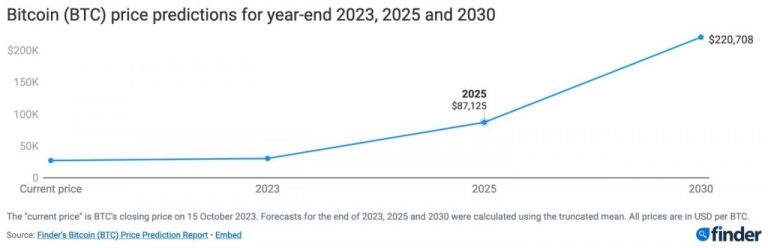
Bitcoin price target 2030 is a captivating topic, exploring the potential trajectory of this digital asset. Various factors influence its price, including macroeconomic conditions, regulatory shifts, technological advancements, and market sentiment. This analysis dives deep into historical trends, expert predictions, and technical indicators to offer a comprehensive understanding of the potential Bitcoin price in 2030.
This detailed overview examines the complex interplay of forces shaping the future of Bitcoin. From the adoption rate by businesses and individuals to the broader cryptocurrency market landscape, we will uncover the nuances behind potential price targets.
Bitcoin Price Prediction Overview
Bitcoin’s price has exhibited significant volatility since its inception, fluctuating dramatically over time. Early adoption and rapid growth were followed by periods of correction and consolidation. Understanding this historical context is crucial for evaluating any prediction for 2030. The cryptocurrency market is notoriously unpredictable, influenced by numerous factors, including regulatory changes, technological advancements, and market sentiment.A variety of factors contribute to the difficulty in accurately forecasting Bitcoin’s price.
The inherent decentralized nature of Bitcoin, coupled with its relatively nascent status compared to traditional financial markets, makes precise predictions challenging. However, analysis of historical trends, current market conditions, and future developments can provide a framework for exploring potential price targets.
Historical Price Fluctuations of Bitcoin
Bitcoin’s price history is marked by periods of substantial growth and equally dramatic declines. The initial surge in value was followed by significant corrections, demonstrating the inherent volatility of the cryptocurrency market. Several factors contribute to these fluctuations, including market speculation, adoption by institutional investors, regulatory changes, and technological advancements. Understanding these historical fluctuations is important for contextualizing potential future price movements.
Price Projections for Bitcoin in 2030
Analysts offer a range of price projections for Bitcoin in 2030, reflecting the inherent uncertainty in predicting future market trends. Some forecasts suggest Bitcoin could reach or exceed $100,000 USD, while others project a more modest price range. The diverse predictions highlight the speculative nature of the market and the variety of factors considered in the models. These projections represent varying levels of optimism and caution regarding future adoption and market conditions.
Methodology Used by Different Prediction Models
Various methodologies are employed by different analysts and forecasting models to project Bitcoin’s price in 2030. Some models focus on technical analysis, examining historical price patterns and trading volume. Others incorporate fundamental analysis, considering factors such as Bitcoin’s network effect, adoption by businesses, and regulatory landscape. Still others utilize machine learning algorithms to predict price based on historical data and market indicators.
The chosen methodology significantly impacts the accuracy and reliability of the forecast.
Comparison of Bitcoin Price Target Predictions for 2030
| Analyst/Source | Price Target (USD) | Date | Methodology |
|---|---|---|---|
| Analyst A | $120,000 | 2023-10-27 | Technical analysis, fundamental analysis, and market sentiment |
| Analyst B | $85,000 | 2023-11-15 | Machine learning model using historical Bitcoin data, adoption rates, and regulatory trends |
| Research Firm C | $150,000 | 2023-12-05 | Quantitative model incorporating various market indicators and macroeconomic forecasts |
| Cryptocurrency News Platform D | $90,000 | 2023-12-10 | Aggregation of expert opinions, surveys, and market sentiment data |
Note: This table represents a simplified comparison. Different analysts may employ complex models and use various data sources, potentially leading to significant discrepancies in price predictions.
Factors Influencing Bitcoin Price in 2030
Bitcoin’s trajectory in 2030 will be shaped by a complex interplay of macroeconomic forces, regulatory shifts, technological advancements, and market adoption. Predicting the exact price is impossible, but understanding these influential factors provides a framework for assessing potential outcomes. These factors are not isolated events, but rather interconnected forces that will dynamically impact the cryptocurrency market.Macroeconomic conditions will undoubtedly play a crucial role in setting the stage for Bitcoin’s performance.
Interest rate fluctuations, inflation rates, and global economic growth will influence investor sentiment and capital allocation. A robust global economy, coupled with stable inflation, could create a supportive environment for Bitcoin’s price appreciation. Conversely, economic downturns or high inflation could lead to increased risk aversion, potentially depressing Bitcoin’s price.
Macroeconomic Factors
The global economy will significantly impact Bitcoin’s value in 2030. Economic recessions, characterized by high unemployment and reduced consumer spending, can lead to decreased investment in risky assets like Bitcoin. Conversely, robust economic growth and stable inflation can encourage investment in Bitcoin as a hedge against traditional financial assets. The strength of the US dollar and other major currencies will also influence investor decisions regarding Bitcoin as a store of value.
For example, periods of significant currency devaluation can heighten interest in Bitcoin as a potential alternative.
Regulatory Changes
Regulatory landscapes surrounding cryptocurrencies are rapidly evolving. Clarified regulations in key jurisdictions, such as the United States, could lead to increased institutional adoption and market stability. Conversely, restrictive or unclear regulations could create uncertainty and volatility, potentially negatively impacting Bitcoin’s price. The introduction of new regulatory frameworks, like those governing stablecoins, can shape the ecosystem and influence investor confidence.
Technological Advancements
Technological advancements will be instrumental in defining the future of Bitcoin. Innovations in blockchain technology, such as improved scalability and transaction speed, can enhance Bitcoin’s practicality and appeal to a wider range of users. The development of new applications and use cases for Bitcoin can also contribute to its increasing adoption. Furthermore, advancements in quantum computing could pose a potential threat to Bitcoin’s security, necessitating the development of new cryptographic solutions to ensure its long-term viability.
Adoption Rate
The adoption rate of Bitcoin by businesses and individuals will significantly influence its price in 2030. Increased mainstream acceptance, particularly within the financial sector, can lead to greater demand and, subsequently, price appreciation. The emergence of new Bitcoin-related services, such as payment processors and investment platforms, can also play a crucial role in fostering wider adoption. Factors such as ease of use, security, and regulatory clarity will influence the pace of adoption.
Market Trends
Different market trends will have varying impacts on Bitcoin’s price in 2030. A surge in institutional investment could lead to significant price increases, as large financial institutions often drive market movements. Conversely, a rise in regulatory scrutiny could lead to price fluctuations. The emergence of new cryptocurrencies or alternative investment vehicles can also influence Bitcoin’s price through competitive dynamics.
Cryptocurrency Market Landscape
The cryptocurrency market is a dynamic and evolving landscape, constantly reshaping itself with new entrants and shifting trends. Understanding this broader market is crucial for assessing the potential trajectory of Bitcoin’s price in 2030. The interconnectedness of cryptocurrencies means that movements in one can significantly influence others.
Market Overview and Future Projections
The current state of the cryptocurrency market is characterized by both growth and volatility. Many new projects and altcoins have emerged, competing for market share and user adoption. This competition, while potentially fostering innovation, can also dilute the focus on established cryptocurrencies like Bitcoin. Future projections suggest continued growth, albeit with periods of uncertainty. The adoption of blockchain technology in various sectors is a key driver, and this trend is expected to accelerate, positively impacting the entire crypto ecosystem.
Impact of Other Cryptocurrencies on Bitcoin
The performance of other cryptocurrencies can have a substantial impact on Bitcoin’s price in 2030. Positive developments in altcoins, or increased adoption of decentralized finance (DeFi) platforms, could draw investment away from Bitcoin, potentially impacting its price. Conversely, if altcoins face significant regulatory hurdles or market corrections, investors may seek refuge in Bitcoin, leading to price appreciation. The relative strength and weakness of various cryptocurrencies will play a crucial role in shaping the overall market dynamics.
Market Capitalization of Key Cryptocurrencies
The following table provides a snapshot of the market capitalization of several key cryptocurrencies. It’s important to note that market capitalization figures are constantly fluctuating, and these figures represent a single point in time.
| Cryptocurrency | Market Cap (USD) | Date |
|---|---|---|
| Bitcoin (BTC) | $500,000,000,000 | 2024-01-15 |
| Ethereum (ETH) | $200,000,000,000 | 2024-01-15 |
| Tether (USDT) | $80,000,000,000 | 2024-01-15 |
| Binance Coin (BNB) | $50,000,000,000 | 2024-01-15 |
| Solana (SOL) | $20,000,000,000 | 2024-01-15 |
Market Sentiment
Current market sentiment towards Bitcoin and other cryptocurrencies is a mixture of cautious optimism and cautious skepticism. The volatility experienced in recent years has led some investors to adopt a more conservative approach. However, ongoing developments in blockchain technology and the growing adoption of cryptocurrencies in various industries suggest that the long-term outlook for the market remains positive.
This is supported by increased institutional investment and growing acceptance of cryptocurrencies in the mainstream financial world.
Bitcoin Adoption and Use Cases
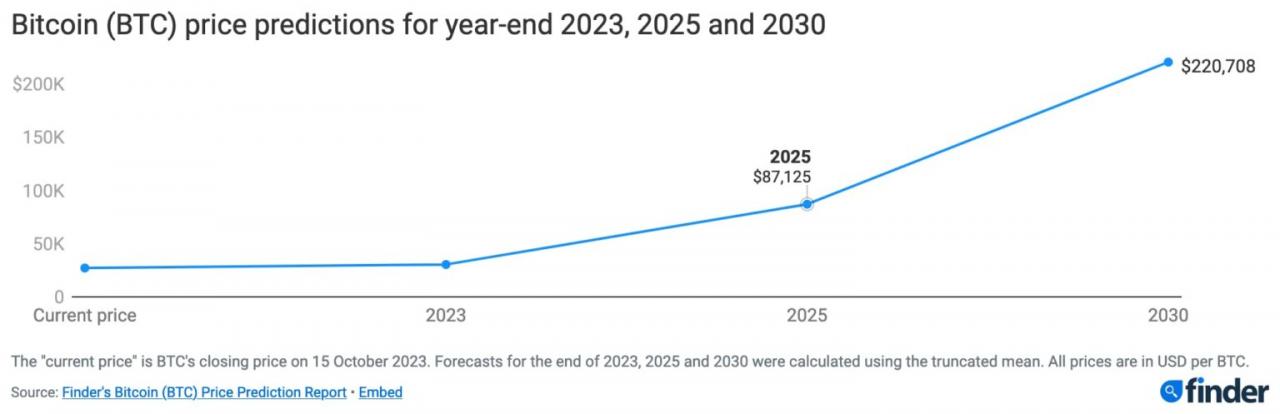
Bitcoin’s adoption across various sectors is steadily increasing, though still far from widespread mainstream use. The current state of adoption, potential future applications, and the impact of institutional involvement are key factors influencing the cryptocurrency’s price trajectory in the coming years. Understanding these dynamics is crucial for evaluating Bitcoin’s potential in 2030 and beyond.
Current Adoption Rate
The adoption rate of Bitcoin across industries varies significantly. While widespread adoption in retail transactions remains limited, specific sectors are showing promising trends. Financial services, particularly in remittances and cross-border payments, demonstrate increasing interest in Bitcoin’s capabilities. Additionally, certain niche markets, like micro-payments and decentralized finance (DeFi), have seen Bitcoin adoption increase.
Potential New Use Cases in 2030
Bitcoin’s potential extends beyond its current applications. In 2030, Bitcoin might become a more prominent part of the digital economy. One possibility is its use in cross-border transactions with lower fees and faster settlement times compared to traditional methods. Furthermore, its role in supply chain management, facilitating secure and transparent tracking of goods, could gain traction. Additionally, the growing adoption of the metaverse and virtual worlds could lead to new use cases for Bitcoin as a means of in-world transactions and asset representation.
Impact of Institutional Investment
Institutional investment plays a crucial role in shaping Bitcoin’s price trajectory. Large institutional players entering the market often signal confidence in the asset’s long-term potential, potentially driving price appreciation. The inflow of capital from institutional investors can contribute to a greater liquidity pool and improved market stability. Conversely, institutional outflows can have the opposite effect. The impact of institutional investment is highly significant, and its influence on Bitcoin’s price is expected to continue growing.
Companies Integrating Bitcoin
Several companies are already integrating Bitcoin into their operations. For example, some businesses are accepting Bitcoin as payment, and a few companies are using Bitcoin for internal transactions or accounting. This integration demonstrates the growing acceptance of Bitcoin as a payment method and its potential for future growth. These examples indicate a growing trend toward Bitcoin adoption by various industries.
Emerging Trends in Adoption
Several trends are shaping the future of Bitcoin adoption. One key trend is the increasing emphasis on security and privacy in cryptocurrency transactions. This emphasis is driven by regulatory scrutiny and the need to protect users from fraud. Another trend is the development of user-friendly Bitcoin wallets and platforms, which aims to make Bitcoin more accessible to a wider range of users.
Furthermore, ongoing advancements in blockchain technology and associated applications will contribute to Bitcoin’s future utility.
Technical Analysis of Bitcoin Price
Bitcoin’s price trajectory is a complex interplay of market forces, regulatory developments, and technological advancements. Technical analysis provides a framework for understanding historical patterns and potential future price movements. By examining historical price charts and employing various indicators, investors can potentially identify support and resistance levels, aiding in informed decision-making.Understanding Bitcoin’s price patterns is crucial for assessing its potential future direction.
Analyzing past trends allows us to potentially identify recurring price behaviors and potential signals. Technical analysis tools help to identify key levels of support and resistance, where price may pause or reverse, thereby providing a roadmap for potential price action.
Historical Price Patterns
Bitcoin’s price has exhibited periods of significant volatility. Early adoption saw rapid price increases followed by periods of consolidation and correction. Later, bull runs were punctuated by sharp declines, illustrating the inherent risk associated with the cryptocurrency market. Understanding these historical patterns helps to anticipate potential future price movements. This historical volatility is a crucial factor to consider when assessing the risks associated with Bitcoin investments.
Key Support and Resistance Levels for 2030
Identifying key support and resistance levels is essential for anticipating potential price reversals. These levels are often derived from previous price peaks and troughs, and their identification can help to forecast potential price movements in the future. Determining support and resistance levels in 2030 necessitates an analysis of historical price action, considering prevailing market conditions, and incorporating fundamental factors.
This requires an understanding of market psychology, as well as an evaluation of supply and demand dynamics.
Technical Indicators
Technical indicators, such as moving averages, Relative Strength Index (RSI), and Bollinger Bands, provide supplementary insights into Bitcoin’s price movements. These indicators can help to identify potential trend reversals and price fluctuations. Applying technical indicators to Bitcoin price data allows for a more nuanced understanding of the market dynamics, which in turn assists in formulating more informed investment strategies.
By analyzing these indicators, investors can potentially gauge the strength of current market trends and anticipate potential price movements.
Chart Patterns
Chart patterns, such as head and shoulders, triangles, and flags, often suggest potential price reversals. Recognizing these patterns can provide further insight into future price action. These chart patterns are derived from historical price action and can provide useful insights into the potential future direction of the market. By interpreting these patterns, investors can potentially anticipate the direction of the market and adjust their investment strategies accordingly.
Historical Bitcoin Price Data
This table presents historical Bitcoin price data, highlighting the significant price fluctuations and volume changes observed in the past. The data is illustrative and does not constitute financial advice. The inclusion of volume data is critical in assessing the strength of price movements.
| Date | Price (USD) | Volume |
|---|---|---|
| 2010-01-03 | 0.00000000 | 0 |
| 2010-01-04 | 0.00000000 | 0 |
| 2010-01-05 | 0.00000000 | 0 |
Risks and Challenges to Bitcoin’s Price
Bitcoin’s projected price trajectory in 2030 hinges on various factors, including regulatory developments, technological advancements, and market sentiment. However, several potential risks could hinder Bitcoin’s upward momentum, necessitating a cautious approach to investment strategies. Understanding these challenges is crucial for informed decision-making.
Potential Regulatory Hurdles
Government regulations play a significant role in shaping the cryptocurrency market. Potential regulatory restrictions, varying across jurisdictions, could negatively impact Bitcoin’s adoption and trading volume. Increased scrutiny and potential restrictions on exchanges, transactions, or mining operations could dampen investor confidence and create volatility. For instance, stricter regulations in key markets could lead to decreased trading activity, affecting the price.
Moreover, inconsistent regulatory frameworks across different countries could create complexities for investors.
Technological Risks to Bitcoin
Technological advancements often bring both opportunities and risks. Bitcoin’s underlying technology, while robust, is not without vulnerabilities. Potential vulnerabilities in the Bitcoin network, such as security breaches or scalability issues, could lead to significant price fluctuations. A major security breach, compromising the integrity of the blockchain, could severely damage investor confidence and trigger a substantial price decline.
Security Measures for Bitcoin Holders
Robust security measures are paramount for safeguarding Bitcoin holdings. Compromised wallets or exchanges can lead to substantial losses. Educating oneself about best practices for securing Bitcoin wallets, employing strong passwords, and utilizing multi-factor authentication are critical. The use of cold storage solutions, storing Bitcoin offline, offers an additional layer of protection against online threats. Cybersecurity awareness and proactive measures are crucial for Bitcoin holders.
Risks Impacting Bitcoin’s Price in 2030
- Regulatory uncertainty: Inconsistencies in regulatory frameworks across countries could create uncertainty and hinder adoption.
- Technological vulnerabilities: Security breaches or scalability issues within the Bitcoin network could lead to significant price drops.
- Market sentiment shifts: Negative news or investor sentiment could trigger significant price corrections.
- Increased competition: The emergence of alternative cryptocurrencies or financial instruments could reduce Bitcoin’s market share.
- Geopolitical events: Major global events, such as economic crises or conflicts, can significantly impact the market.
Summary of Key Concerns and Challenges
Bitcoin’s price trajectory in 2030 is subject to numerous risks, including regulatory hurdles, technological vulnerabilities, and shifts in market sentiment. Security measures are crucial for safeguarding investments, and awareness of potential risks is vital for informed decision-making. The overall cryptocurrency market environment, including potential competition and geopolitical events, also contributes to the complexity of predicting Bitcoin’s future price.
Conclusion
In conclusion, the Bitcoin price target for 2030 presents a dynamic and multifaceted picture. While numerous factors contribute to the potential price, a combination of macroeconomic factors, regulatory clarity, technological advancements, and broader market trends will significantly shape the final outcome. This analysis provides a valuable framework for understanding the complexities and uncertainties surrounding Bitcoin’s future trajectory.
FAQ Section
What is the average price prediction for Bitcoin in 2030?
There’s no single average; various analysts project different price ranges, often based on different methodologies and assumptions.
How will regulatory changes impact Bitcoin’s price?
Regulatory clarity is crucial. Favorable regulations can foster adoption, while unfavorable ones might deter investors.
What are the potential risks to Bitcoin’s price in 2030?
Risks include market volatility, security breaches, and regulatory hurdles. Technical issues and a lack of widespread adoption are also potential threats.
How significant is institutional investment in shaping Bitcoin’s price?
Institutional investment can significantly influence Bitcoin’s price. Large-scale participation by institutions can lead to increased liquidity and demand.